
Last updated October 15, 2026
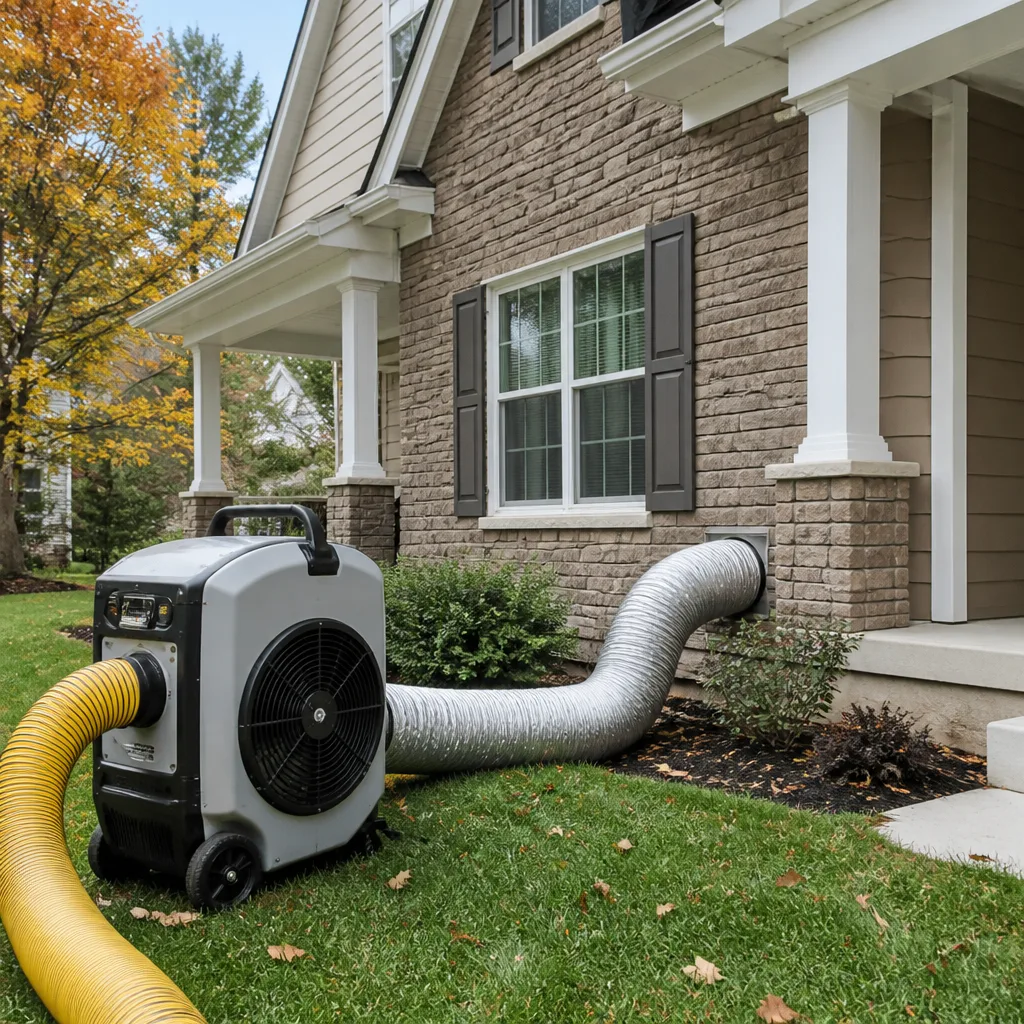 Whole-home duct cleaning
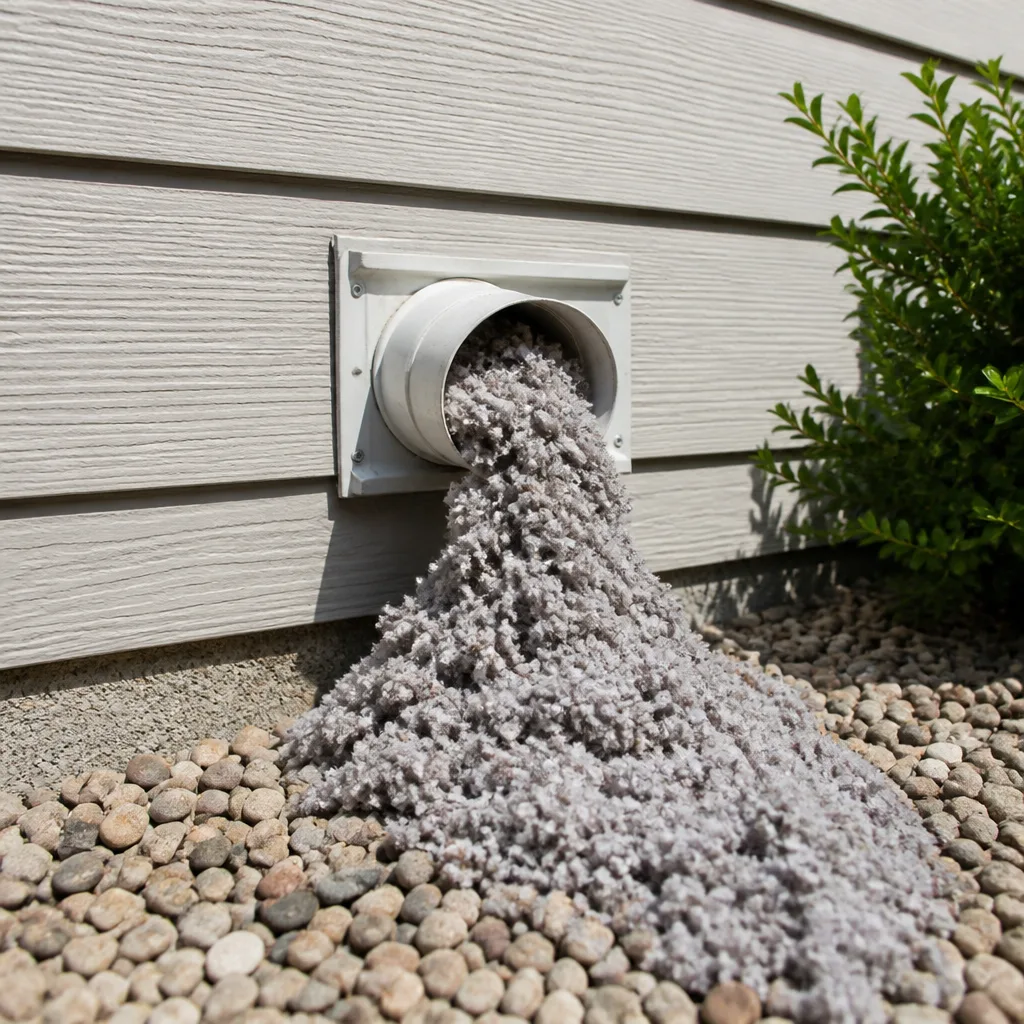 Dryer vent cleaning
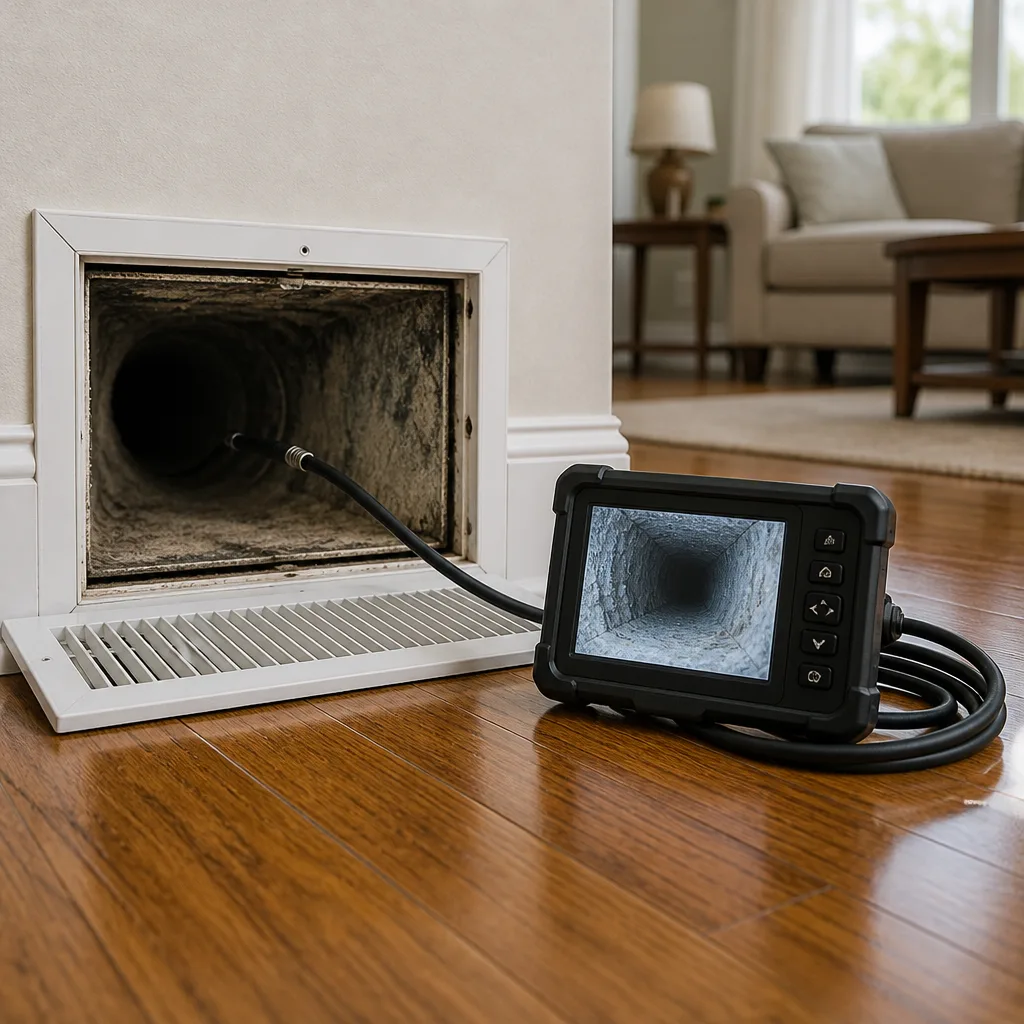 Camera inspection
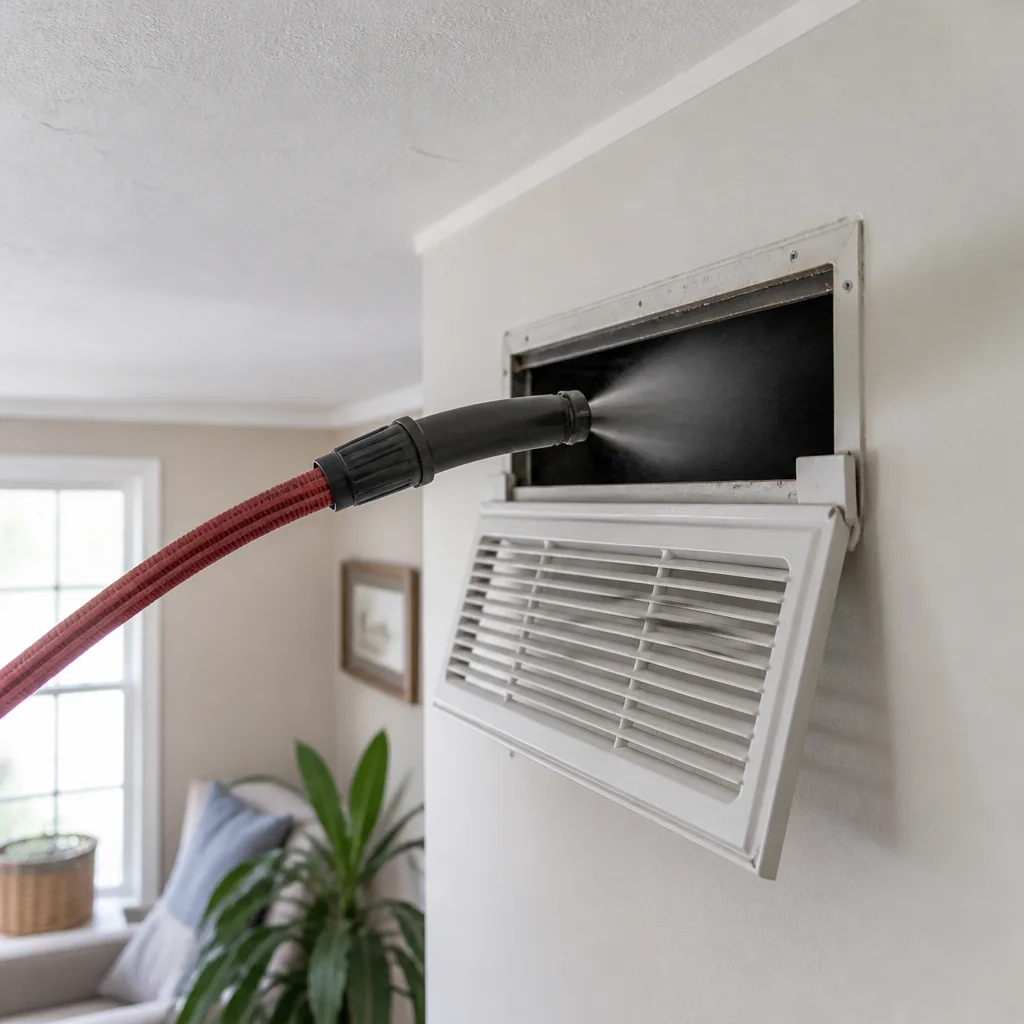 Sanitizing & deodorizing
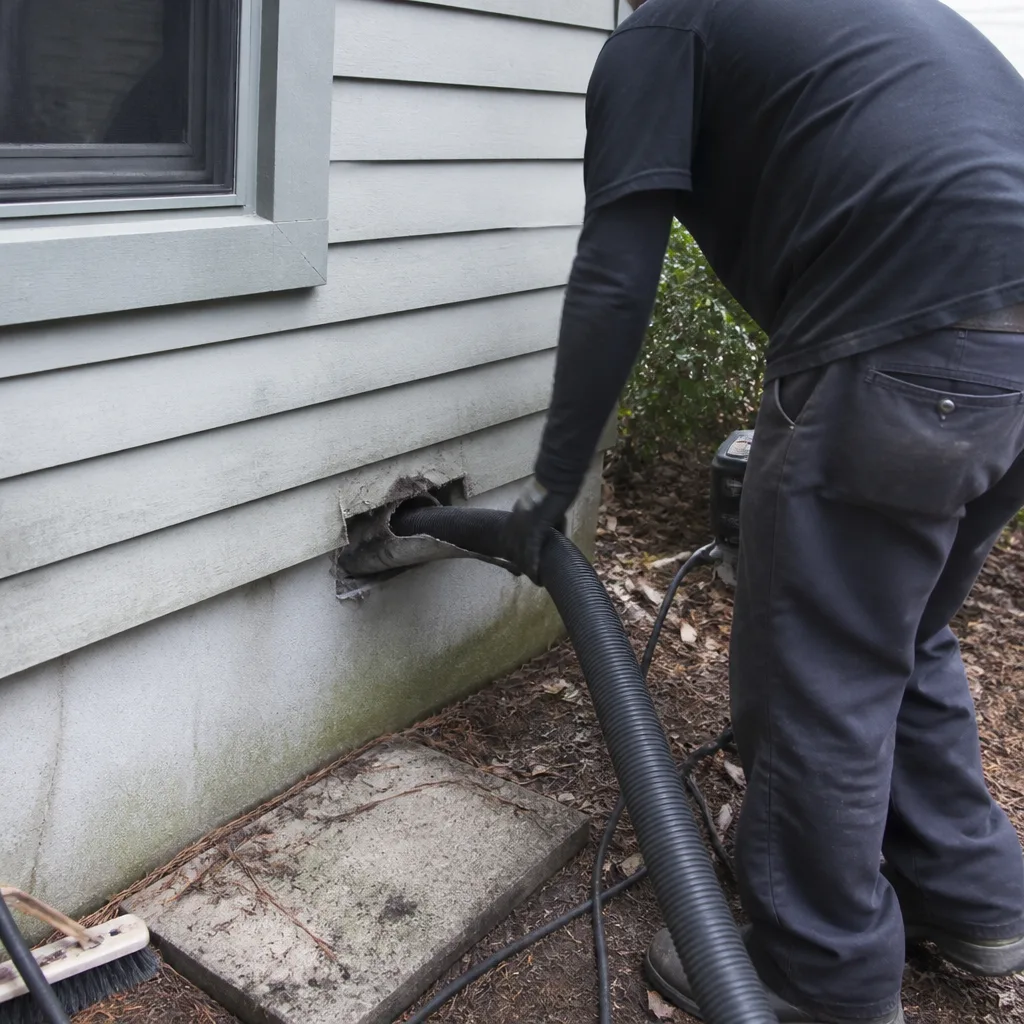
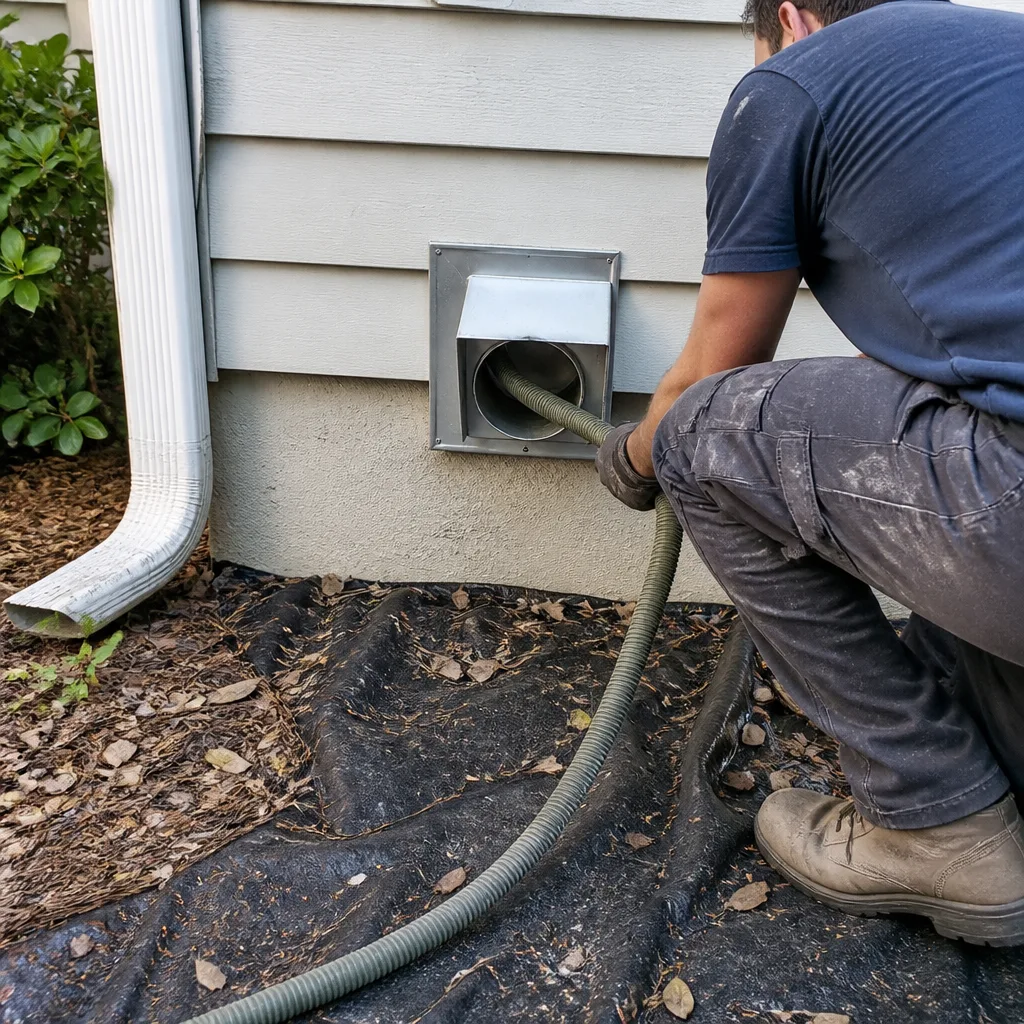
Whole-system duct and dryer vent check with before-and-after photos - you see exactly what came out of your vents
That "$99 whole-house special" is a bait ad - the real number appears once they are in your hallway, or the "clean" is a shop-vac at the register. We photograph the inside of your ducts before and after instead.
The Complete Guide to Air Duct Cleaning in Jacksonville
Jacksonville homeowners run their air conditioners roughly 3,000 hours a year. That’s nearly double what a house in Cleveland or Minneapolis logs, and it changes the entire conversation about duct cleaning. Most national guides repeat the same generic advice about “every 3 to 5 years,” but they’re written for homes that shut their HVAC down for months at a time. This guide is written from Jacksonville, for Jacksonville, and it covers what actually accumulates in your ducts here: sand, humidity-fed mold spores, and the fine particulate that never stops circulating when your system never stops running. For more on our Air Duct Cleaning services, read on. You’ll learn what a legitimate cleaning includes, what it costs, how to verify the work was done, and when a cleaning is genuinely worth the money versus when it’s not.
Quick Answer
Air duct cleaning in Jacksonville typically costs $350 to $850 for a full system, depending on home size and the number of registers. For Jacksonville specifically, most homes should consider cleaning every 3 to 5 years due to high runtime hours and sandy soil, though homes with pets, recent renovations, or visible mold may need it sooner. A legitimate cleaning uses negative-pressure extraction with HEPA filtration and register-by-register access, not a single vacuum hose at the air handler.
Styles & brands we work with
Table of Contents
- Why Jacksonville Is Different: Humidity, Sand, and Runtime
- What a Legitimate Duct Cleaning Actually Includes
- How Much Duct Cleaning Costs in Jacksonville
- Signs You Need Your Ducts Cleaned Now
- How to Read a Post-Cleaning Report
- Older Jacksonville Homes and Flex Duct Challenges
- Duct Cleaning vs. Duct Inspection: When You Need Both
- How to Choose a Duct Cleaning Company in Jacksonville
Why Jacksonville Is Different: Humidity, Sand, and Runtime
Jacksonville’s climate does three things to your ductwork that most national guides never address. First, the humidity. When outdoor air sits at 70 to 90 percent relative humidity for months at a time, your ducts become a condensation surface. Cold air passes through, warm humid air presses against the outside of the duct, and moisture forms. That moisture traps dust, and trapped dust in a humid environment becomes a place where mold and bacteria can grow. We’ve pulled duct sections in Arlington and San Marco where the interior looked like felt from years of humidity-glued particulate.
Second, the sand. Jacksonville sits on coastal plain soil, and anyone who’s lived here more than one summer knows how fine, white sand infiltrates everything. That sand enters your home through open doors, on shoes, on pets, and through window screens. From there, your return vents pull it into the duct system, where it settles in low spots and return trunks. Sandy accumulation is denser than ordinary household dust and harder for airflow alone to move.
Third, runtime. Your system moves air almost constantly from April through October. A system that runs 3,000-plus hours a year filters more air, yes, but it also deposits more particulate across every interior duct surface. Homes in northern climates that run their HVAC 1,500 hours annually simply don’t accumulate what Jacksonville homes do in the same calendar period. This is why the standard advice often falls short here: your ducts are working roughly twice as hard.
What a Legitimate Duct Cleaning Actually Includes
Here’s the thing most homeowners don’t know until after they’ve paid: there are two very different services being sold under the name “duct cleaning,” and one of them barely does anything. The cheap version uses a single large vacuum hose attached at the air handler, relying on suction alone to pull debris backward through the entire system. That approach leaves debris in branch lines and registers because the suction diminishes dramatically with distance. It’s the equivalent of vacuuming your living room through the front door.
A legitimate cleaning is a different process entirely. Here’s what it includes:
- Negative-pressure extraction: A high-powered vacuum creates negative pressure in the duct system, typically rated at 2,000 CFM or more, so that dislodged debris is pulled toward the collection point rather than pushed into your living space.
- HEPA filtration on the collection side: The vacuum exhaust should pass through HEPA filtration so that captured particulate doesn’t blow back into your home. Without HEPA, you’re paying to redistribute dust.
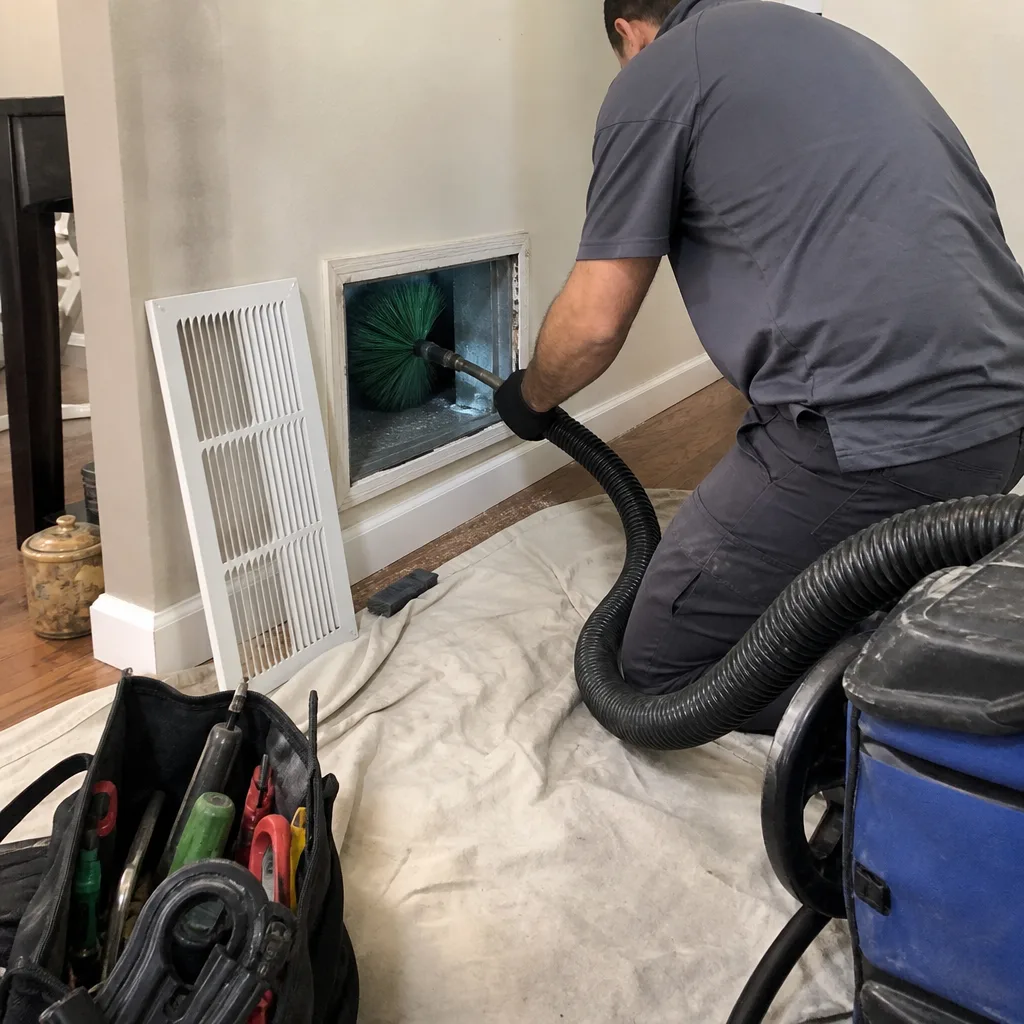
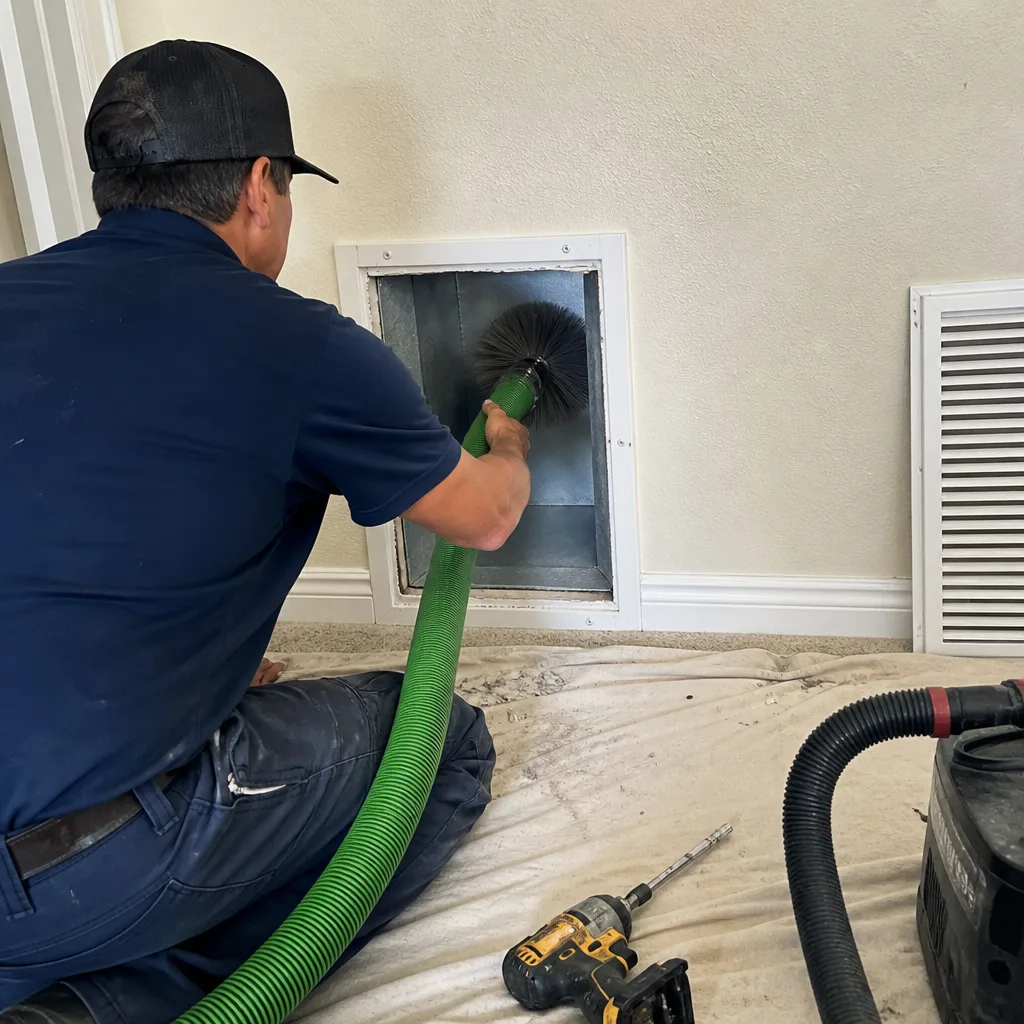
- Register-by-register access: Each supply and return register is opened and cleaned individually, using agitation tools that physically loosen debris from duct walls. This is the difference between cleaning the whole system and cleaning the main trunk.
- Agitation, not just suction: Tools including rotating brushes, compressed air whips, or skipper balls knock debris loose from duct surfaces. Suction alone cannot remove dust that has adhered to humid duct walls in Jacksonville.
- Component cleaning: The blower motor, evaporator coil, and drain pan should be inspected and cleaned if needed. Debris in these components re-contaminates ducts within weeks.
At Linden Air Duct Jacksonville, we run professional-grade equipment from Rotobrush, the trade’s standard for portable negative-air machines, and Nikro for HEPA-filtered collection. If a contractor in Jacksonville cannot tell you what equipment they use and why, they’re not doing the job you’re paying for.
How Much Duct Cleaning Costs in Jacksonville
Duct cleaning prices in Jacksonville range from $350 to $850 for a complete system on a typical single-family home. Smaller condos or townhomes with 6 to 8 registers may fall in the $300 to $450 range. Larger homes with 15 or more registers, multiple zones, or crawl-space access challenges can run $700 to $1,000. The average sits around $450 to $600.
What drives the cost:
- Number of registers: Each register is a separate access point requiring tooling and time.
- Number of systems: Two-story Jacksonville homes often have two air handlers, which is essentially two separate cleanings.
- Duct condition: Flex duct that has sagged, collapsed, or been chewed by rodents may need repair before or during cleaning, adding cost.
- Access difficulty: Attic systems in the summer heat are slow, physically demanding work. Crawl-space systems in older Jacksonville neighborhoods like Springfield and Riverside add similar complexity.
- Contamination severity: If we find significant mold, rodent debris, or construction dust from a renovation, the job takes longer and costs more.
What you should not see is a “per-vent” price that starts low and multiplies. A quoted price of $29 per vent sounds cheap until you realize a standard Jacksonville home has 11 to 14 vents and the final invoice lands at $500 to $700 plus add-ons. Our advice: ask for one flat price for the entire system before any work begins. If a company refuses to put a whole-system price in writing, you’re dealing with a bait-and-switch model. For a detailed breakdown of what our service includes, see our Air Duct Cleaning in Jacksonville page.
Signs You Need Your Ducts Cleaned Now
Some Jacksonville homes need cleaning every three years. Others can go a decade. Here’s how to tell which camp you’re in, and for DIY vs Professional Air Duct Cleaning: The Jacksonville Homeowner’s Decision Guide, see our related post.
- You see dust on supply registers or streaking on walls near vents. This means particulate is actively exiting your duct system into the living space. This is not normal operation. Clean ducts don’t deposit visible dust lines on your paint.
- You changed your HVAC filter and it’s dirty again in under 30 days. A filter that loads up within a month in Jacksonville means the duct system itself is holding a significant dust reservoir that keeps recirculating.
- You had a renovation or major drywall work. Construction dust is fine enough to pass through most filters and will settle throughout the duct system. Any renovation that involved sanding, cutting, or texturing should be followed by a duct cleaning.
- You see mold or moisture evidence. Dark staining around registers, a persistent musty smell that worsens when the AC runs, or visible growth inside accessible duct sections indicates a humidity problem that needs correction along with cleaning. This is more common in Jacksonville than in most cities because of our humidity, especially in homes where the AC struggles to maintain indoor humidity below 55 percent.
- Rodent or insect evidence. Droppings in the ducts, nesting material at registers, or a dead-animal smell that comes and goes with airflow. This is a health issue, not just a nuisance, and requires cleaning plus sanitation.
- Your home gets dusty within days of cleaning surfaces. You dust on Saturday, and by Wednesday there’s a visible film again. That dust is coming from somewhere, and in many Jacksonville homes the somewhere is the duct system.
If none of these apply, you may not need cleaning yet. Honest contractors will tell you that. Anyone who insists every home needs annual cleaning is selling a subscription, not a service. For homes with dryer vent concerns as well, see our Dryer Vent Cleaning in Jacksonville page for the same straight answer on that service.
How to Read a Post-Cleaning Report
You wouldn’t accept a mechanic’s word that your brakes were replaced without seeing the car. Duct cleaning should be held to the same standard. A professional cleaning should end with documentation that proves the work was performed, not just an invoice that says “cleaned ducts.”
Here’s what a legitimate post-cleaning report includes:
- Before and after photos of key locations: The return trunk, at least one branch line, the blower compartment, and the coil. These should be timestamped and tied to your job. We take photos at every register we can physically access, plus the main trunk lines.
- A register-by-register checklist: Each register that was opened, agitated, and re-sealed should be listed. If a register was inaccessible due to furniture, that should be noted, not glossed over.
- System readings: Static pressure before and after cleaning helps confirm that cleaning improved airflow rather than just moving dust around. A drop in static pressure after cleaning indicates the system is breathing easier.
- Debris removal volume: How many gallons or pounds of material were collected. This is the most tangible proof the cleaning accomplished something. A legitimate cleaning of a genuinely dirty Jacksonville system typically removes several pounds of material.
- Observations and recommendations: If the technician saw flex duct damage, coil corrosion, or moisture issues, those should be documented with photos and a written recommendation. You’re not obligated to act on them, but they should be in the report.
If a company hands you a receipt and a wave goodbye, you haven’t received verification. In our experience, the companies that document everything are also the ones that clean thoroughly, because documentation creates accountability.
Older Jacksonville Homes and Flex Duct Challenges
Jacksonville has a massive stock of homes built between 1950 and 1990, and many of these have either original rigid metal ducts or flex duct retrofits from a later HVAC replacement. Both present cleaning challenges that a one-size-fits-all approach will miss.
Homes built before 1990 in neighborhoods like Avondale, Riverside, San Marco, and parts of Arlington often have rigid galvanized ducts. These are actually cleanable in the truest sense: the metal surface can be agitated and stripped of debris. But those same ducts are now 50 to 70 years old in some cases, and they may have gaps at seams, rust-through in humid areas, or original fiberglass insulation on the exterior that has degraded. Aggressive cleaning on thin, rusted metal can cause more damage than it fixes.
Flex duct, which became standard in Jacksonville construction from roughly the 1990s onward, is a different animal. Flex duct has a plastic inner liner with a spiral wire support, wrapped in fiberglass insulation and a vapor barrier. The inner liner is delicate. Aggressive rotary brushing can tear it, and a torn liner means insulation fibers can enter the airstream. Proper flex duct cleaning uses lower-pressure agitation and air washing rather than hard brushing.
Worse, flex duct in Florida attics is routinely attacked by rodents and damaged by heat. The attic in a Jacksonville summer can hit 140 degrees, which accelerates the degradation of the plastic liner. When we inspect systems in Mandarin or the Southside, we frequently find flex duct that has collapsed, sagged, or been chewed through. Cleaning alone does not fix those problems, and cleaning a damaged flex duct can actually make particulate release worse. A proper job starts with inspecting the duct condition, then cleaning or repairing accordingly. This is also why Air Duct Repair in Jacksonville is a separate service: cleaning and repair serve different problems, and honest contractors separate the two rather than discovering “repairs” only after they’ve started cleaning.
Duct Cleaning vs. Duct Inspection: When You Need Both
A duct cleaning removes accumulated debris. A duct inspection evaluates the system’s condition: leaks, damage, insulation integrity, airflow, and contamination sources. They’re different services with different purposes, and Jacksonville homeowners sometimes need one, sometimes the other, and sometimes both.
Here’s the distinction in practical terms:
- Get a cleaning when you have confirmed debris accumulation: visible dust at registers, recent construction dust, rodent activity that’s already been addressed, or a system that hasn’t been cleaned in 7-plus years with high runtime.
- Get an inspection when the problem is a symptom you can’t yet explain: a persisting musty smell, uneven cooling between rooms, unexplained high energy bills, or visible moisture staining. These indicate a system problem, not just dirty ducts.
- Get both when you’ve recently purchased a home, especially an older Jacksonville home where the duct history is unknown. A pre-purchase HVAC inspection typically evaluates the equipment, but rarely the ducts. We recommend a duct-specific inspection at move-in, followed by cleaning if the inspection finds contamination.
An honest company will tell you which service you need and why. If you call and ask for a cleaning and the technician tells you that what you actually need is a repair or an inspection first, listen. That’s the difference between a company that wants your one-time payment and a company that wants your system functioning correctly for years.
How to Choose a Duct Cleaning Company in Jacksonville
The duct cleaning industry has a reputation problem, and it’s earned. Low-barrier entry means anyone with a vacuum and a website can call themselves a duct cleaner, and Jacksonville has its share of trunk-slammer outfits that run group-coupon deals and vanish when the work disappoints.
Here are the specific questions to ask before anyone enters your home:
- “What’s your total price for my entire system, in writing?” If they can’t give you a flat number after a quick conversation about your home’s size and register count, they’re building a variable invoice. Walk away.
- “Who exactly is coming to my home?” A legitimate company can tell you the technician’s name before the visit and backs that up at the door. You should see photo ID before anyone crosses your threshold. We send every customer their technician’s name and photo before the visit, and our techs show a photo ID badge at the door. This is the core of our Threshold Standard: background-checked, identity-verified, photo-badged technicians, every single visit.
- “What equipment do you use?” The answer should include negative-pressure extraction and HEPA filtration. Brand names like Rotobrush and Nikro are good signs. A truck-mounted vacuum attached to a single point is not a complete cleaning.
- “What documentation will I receive when you’re done?” The answer should include before-and-after photos and a register-by-register checklist at minimum. If the answer is “an invoice,” you’ve learned what you need to know.
- “What happens if I’m not satisfied?” The company should have a written answer. Our 365-Day Done Right Promise covers every job in writing: if the work isn’t right, we make it right, no renegotiation.
For Jacksonville homeowners specifically, we’d add two more local checks. First, confirm the company actually operates here rather than routing calls to a national call center that dispatches subcontractors. Call the number and ask where their technicians are based. Second, ask about experience with Florida-specific duct challenges: humidity control, flex duct, and attic systems. A company that’s been serving Jacksonville since 2004 has seen thousands of these systems; a company that opened last month hasn’t.
Common Mistakes to Avoid
- Paying per vent. Per-vent pricing is designed to obscure the final cost. A $39-per-vent quote on a 14-vent home is $546 before “extras,” and there are always extras. Demand one flat, whole-system price in writing first.
- Accepting “blower only” cleaning as a full service. Vacuuming at the air handler cleans one point, not the system. If the crew doesn’t access every register, they didn’t clean your ducts.
- Skipping the post-job documentation. If you don’t require photos and a checklist, you’re paying on trust in an industry that hasn’t earned it. Documentation is the difference between a cleaned system and a claim of one.
- Believing “every home needs annual cleaning.” It doesn’t. A home with good filtration, no pets, no renovation, and a properly sealed system may go 5 to 7 years between cleanings in Jacksonville. Anyone pushing annual service as a matter of course is selling a recurring revenue stream, not a necessary service.
- Ignoring the filter conversation. A duct cleaning is pointless if you’re running cheap fiberglass filters that let everything pass through. Your technician should discuss filter upgrade options. We regularly recommend media filters and products from Aprilaire, which trap far more particulate than basic filters and protect the clean ducts you just paid for.
- Choosing on price alone. The cheapest Jacksonville duct cleaning is usually the most expensive by the time the invoice grows. The floor for a legitimate whole-system cleaning in this market is around $300. If someone quotes you $149 for everything, the math doesn’t work for a real company with real equipment and real insurance, and you’ll discover why during the “inspection.”
- Getting ducts cleaned before fixing the source. If you have a humidity problem, a roof leak, or a pest issue, cleaning first just means cleaning again in six months. Fix the source, then clean the ducts.
See the difference
 Before
 After
After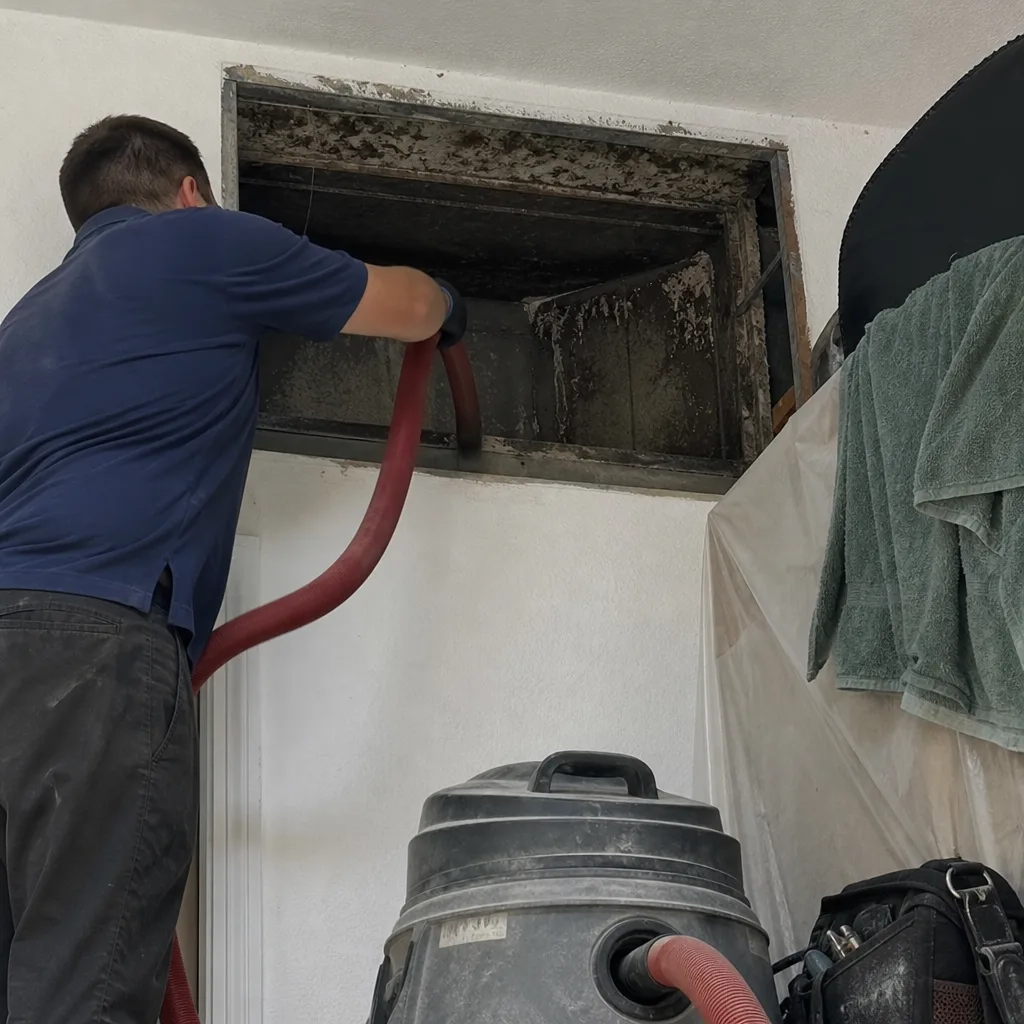 Before
 After
After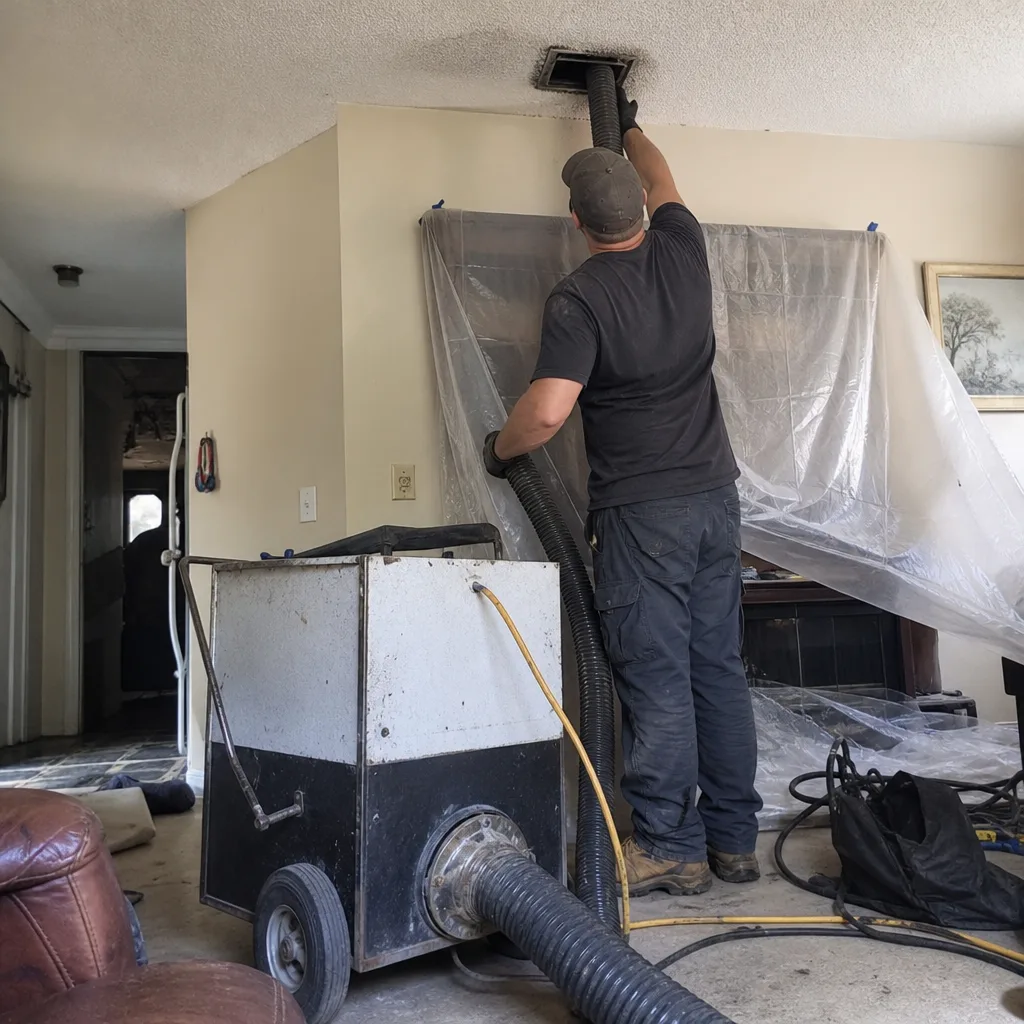 Before
 After
AfterWhen to Call a Professional
Duct cleaning is not a DIY job, and the reasons go beyond inconvenience. The access points are in attics that hit 140 degrees in a Jacksonville summer. The equipment needed for negative-pressure extraction costs tens of thousands of dollars. And the risk of damaging aging flex duct or disturbing mold without proper containment is real. If you’ve confirmed debris accumulation, noticed visible mold at registers, completed a renovation, or moved into a home with unknown duct history, it’s time to bring in a professional. Linden Air Duct Jacksonville offers free estimates in Jacksonville. Call (904) 329-7854 and you’ll speak to a live person, any hour of any day, who can walk you through pricing and scheduling without a script.
Frequently Asked Questions
Expect to pay $350 to $850 for a complete whole-system duct cleaning in Jacksonville, with most homes falling in the $450 to $600 range. Smaller condos and townhomes may run $300 to $450, while larger two-story homes with multiple systems can reach $1,000. Any quote below $300 for a whole-system cleaning should be treated with suspicion, as the economics don’t support real equipment and real labor at that price. Call (904) 329-7854 for an exact quote for your home’s system, free of charge and without obligation.
Most Jacksonville homes benefit from duct cleaning every 3 to 5 years, driven by our high HVAC runtime and sandy environment. Homes with multiple pets, recent renovation work, or confirmed mold issues may need cleaning sooner, while homes with upgraded filtration and no pets may go longer. There is no single schedule that fits every home, and any company that tells you otherwise is oversimplifying to sell a service.
Cheaper quotes typically reflect a different scope of work. A $149 special is almost always a blower-only or single-access-point service that leaves the branch lines and registers untouched, or a bait price that grows once the technician is in your attic. A legitimate negative-pressure cleaning with register-by-register access, professional-grade equipment, and post-job documentation costs what it costs because the work is real. If a quote seems too good to be true in Jacksonville’s duct cleaning market, it is.
Demand before-and-after photos of your return trunk, branch lines, and blower compartment, plus a register-by-register checklist showing every access point that was opened and cleaned. A legitimate company provides this documentation as a matter of course. If you’re handed only an invoice, you haven’t received proof of work. This documentation is part of our standard process on every job in Jacksonville, and it’s yours to keep.
No, routine duct cleaning is considered maintenance and is not covered by standard homeowners insurance in Jacksonville. However, duct cleaning following a covered event, such as fire damage, water damage from a burst pipe, or storm-related contamination, may be covered as part of the restoration claim. Check your policy and work with your adjuster to confirm coverage before scheduling.
It can, but only if the ducts were actually contaminated and the cleaning removes genuine debris. Jacksonville’s year-round allergen load, including oak and pine pollen, mold spores, and fine sand, accumulates in duct systems and can be re-released into your living space continuously. If you notice dust building up quickly after cleaning surfaces, or if your symptoms improve when you leave home and worsen when you return, dirty ducts may be a contributing factor. Cleaning addresses the duct system specifically, and pairing it with upgraded filtration from Aprilaire or Honeywell gives you the best result.
The Bottom Line
Air duct cleaning in Jacksonville is not a ritual you perform on a calendar schedule. It’s a response to real, verifiable conditions: debris accumulation driven by 3,000-plus runtime hours, sand ingress, humidity-fed organic growth, and the accumulated material of years of continuous circulation. A legitimate cleaning uses negative-pressure extraction, HEPA filtration, and register-by-register access, and it ends with documentation that proves the work happened. Jacksonville’s older homes add complexity: flex duct requires gentler techniques, aging metal ducts require inspection before agitation, and credible companies separate cleaning from repair. Choose a provider who gives you a flat price in writing, tells you exactly who’s coming to your door with photo ID, and stands behind the work in writing. For more guides & resources, visit our blog. That’s the standard we hold ourselves to on every job in Jacksonville, and it’s the standard you should hold any contractor to before you let them into your home. Call (904) 329-7854 for a free estimate, and a live person will answer.
Written by Marcus Veale, Owner at Linden Air Duct Jacksonville, serving Jacksonville since 2004.