
Last updated October 15, 2026
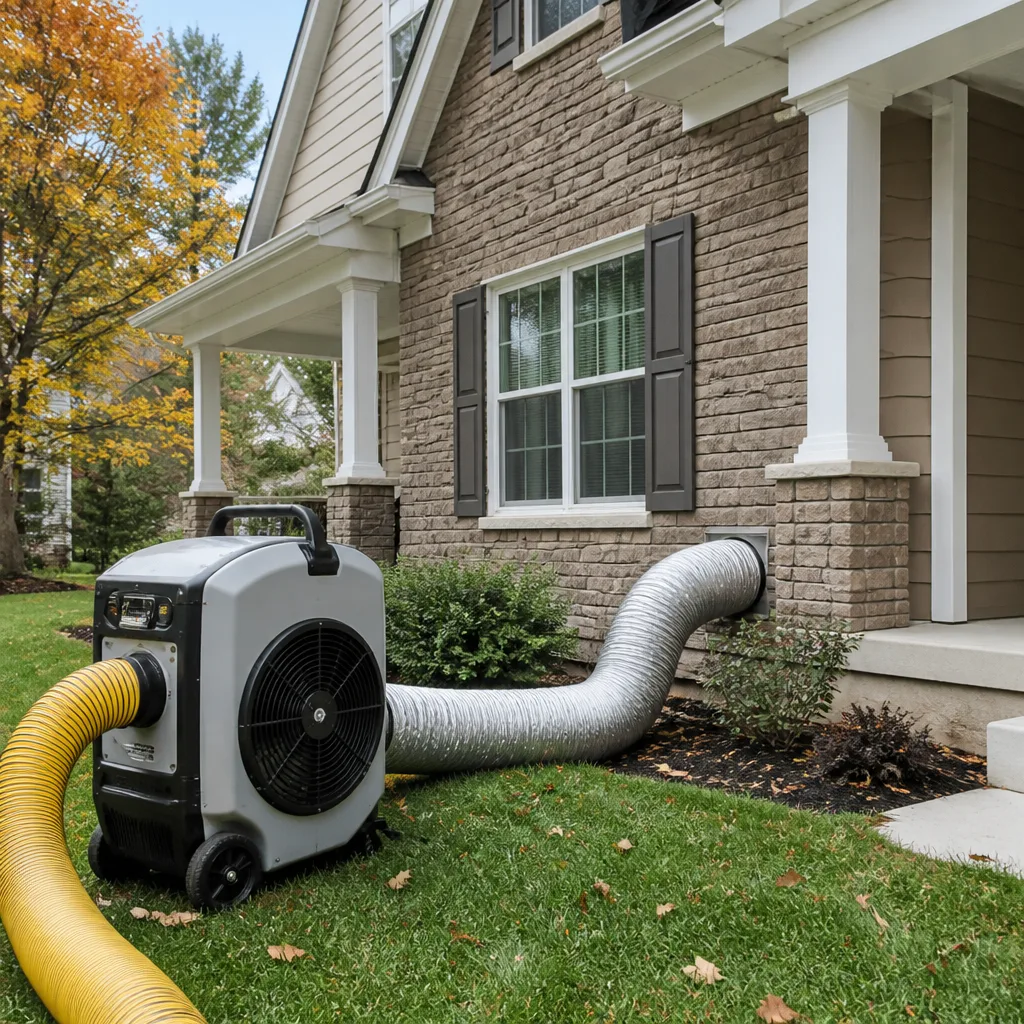 Whole-home duct cleaning
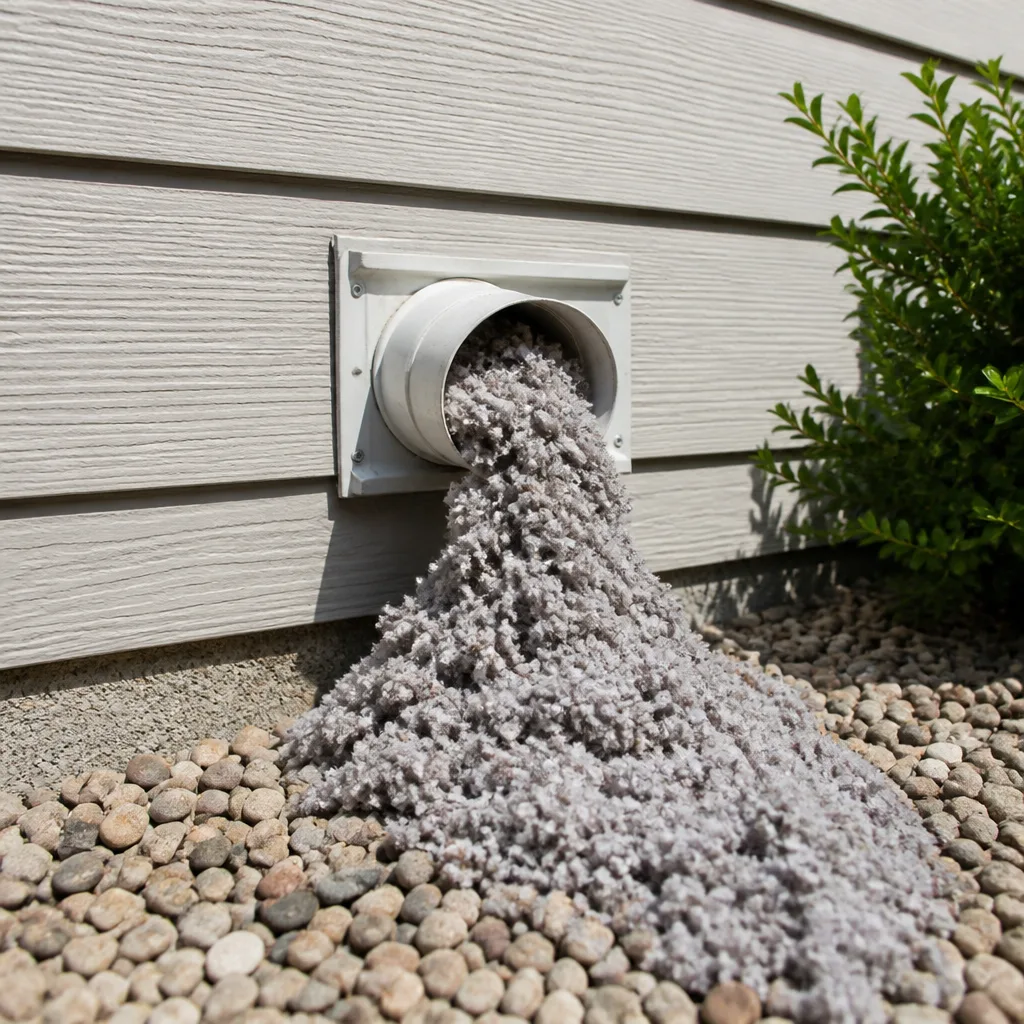 Dryer vent cleaning
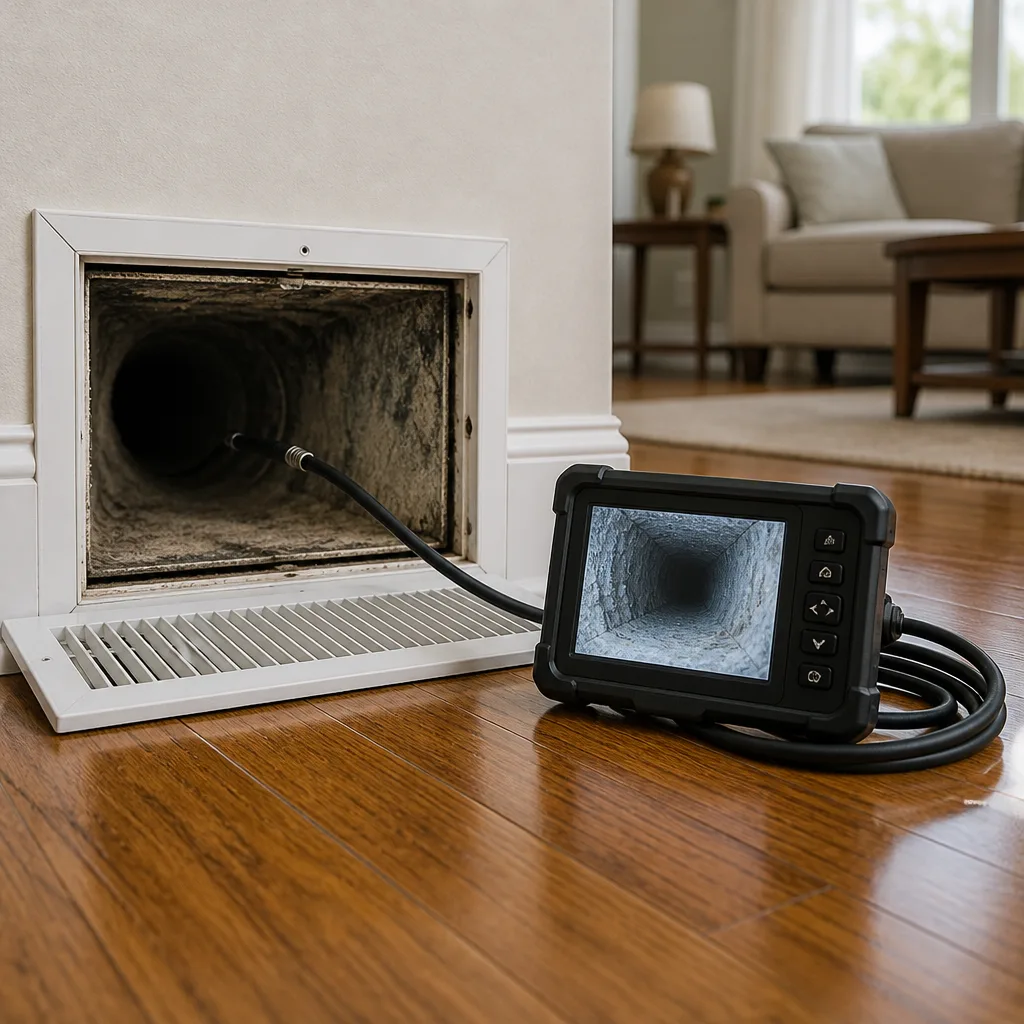 Camera inspection
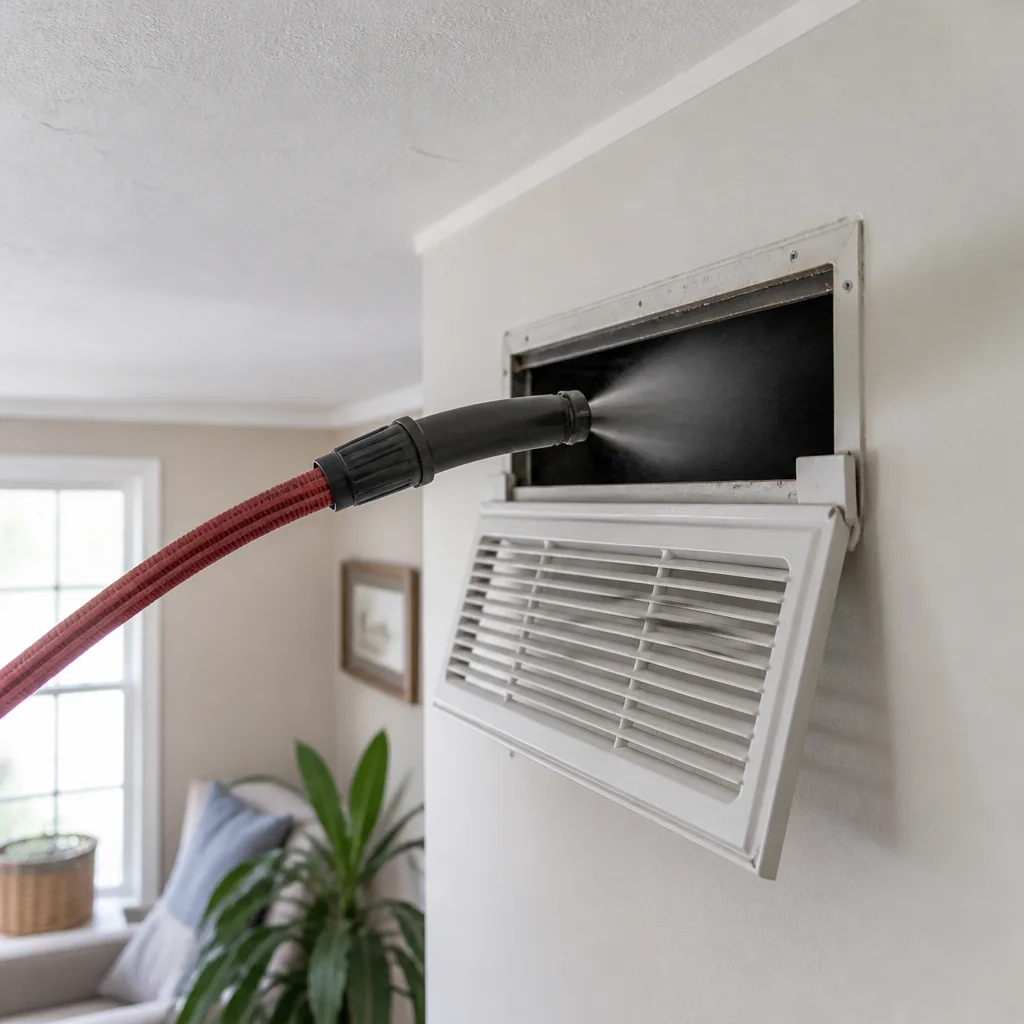 Sanitizing & deodorizing
Whole-system duct and dryer vent check with before-and-after photos - you see exactly what came out of your vents
That "$99 whole-house special" is a bait ad - the real number appears once they are in your hallway, or the "clean" is a shop-vac at the register. We photograph the inside of your ducts before and after instead.
DIY vs Professional Air Duct Cleaning: The Jacksonville Homeowner’s Decision Guide
A homeowner with a shop vac, a screwdriver, and a $40 brush kit can effectively clean the inside of visible registers and roughly the first 12 inches of duct branch runs. That covers about 15% of the debris surface area in a typical Jacksonville home. Knowing that number does more for your decision than any sales pitch ever will, because it tells you exactly when a Saturday afternoon with a shop vac is the right call, and when you’re just moving dust around a system you can’t actually reach. This guide maps that boundary honestly, using what we’ve seen inside thousands of duct systems across Jacksonville since 2004.
Styles & brands we work with
Quick Answer
DIY air duct cleaning in Jacksonville makes sense for visible surface work: registers, grilles, filter housings, and the first foot of accessible duct. It cannot replicate what professional negative-pressure extraction with a powered rotary brush accomplishes, which removes debris from the full duct network that a shop vac hose simply cannot reach. If your Jacksonville home hasn’t been cleaned in more than five years, has fiberboard duct liner, or has been through a renovation, professional Air Duct Cleaning is the decision that actually solves the problem rather than postponing it.
Table of Contents
- What DIY Duct Cleaning Can and Cannot Physically Reach
- The Jacksonville Conditions That Change the DIY vs Pro Calculus
- An Honest Cost Comparison: DIY Kit vs Professional Service in Jacksonville
- DIY Best Practices That Are Genuinely Worth Your Time
- How to Use a DIY Inspection to Prepare for a Professional Cleaning
- How Professional Air Duct Cleaning Actually Works
- Common Mistakes to Avoid
- When to Call a Professional
- Frequently Asked Questions
- The Bottom Line
What DIY Duct Cleaning Can and Cannot Physically Reach
Let’s talk about what’s actually inside your ductwork, because the physical geometry of the system is what decides this entire debate. A typical Jacksonville single-family home has between 10 and 18 supply registers connected to a trunk line that runs through the attic, a crawl space, or occasionally a basement. Each register connects to the main trunk via a branch run, and most branch runs in Florida homes are 6 to 8 inches in diameter and 10 to 20 feet long. You can see maybe the first 6 to 12 inches of that run from the register opening.
Your shop vac hose, even with a flexible brush attachment, loses meaningful suction and mechanical agitation after about 28 to 36 inches into a 6-inch duct. The brush spins, but it can’t navigate the elbows and transitions where dust actually accumulates. The physics of airflow works against you: a shop vac pulls roughly 100-150 CFM through a 2.5-inch hose, while professional negative-pressure systems move 4,000-6,000 CFM through the duct itself. That’s not a scaling difference; it’s a different category of tool. The professional system creates negative pressure inside the entire duct run, so debris lifts from all surfaces and carries toward the collection unit. The shop vac only pulls what’s within a few inches of the nozzle.
Here’s the surface area math that explains why that 15% figure matters:
- Register face and boot (the visible part): roughly 12-18 square inches per register, cleanable with a brush and vacuum. This is where you see dust accumulate.
- First 12 inches of branch run: roughly 220-300 square inches per run, partially accessible from the register opening with a flexible brush.
- Remaining 15-19 feet of each branch run: 3,400-4,300 square inches per run. Not reachable by homeowner tools.
- Trunk line (main supply plenum): commonly 40-60 linear feet with a 14-18 inch diameter. This is where the majority of legacy debris lives: construction dust, previous renovations, years of skin cells, pet dander, and Florida’s fine sand that gets tracked in on every shoe.
- Return air drop and filter housing: partially accessible if it’s a wall cavity return; sealed and inaccessible if it’s ducted through a chase.
In our experience cleaning duct systems in Arlington, Mandarin, Riverside, and San Marco, the trunk line is consistently where the worst accumulation sits. Homeowners who take off a register and see a clean-looking first foot often conclude their ducts are fine. What they can’t see is the 15 feet behind that first foot, where dust has been settling in a low-velocity zone for years. Jacksonville’s return registers, especially in homes built between 1960 and 1990, often feed into unlined chase cavities that collect decades of dust at the base. That specific condition is one we see weekly in the older brick homes of Avondale and Ortega.
The Jacksonville Conditions That Change the DIY vs Pro Calculus
Jacksonville isn’t Phoenix or Denver. Our humidity, our construction stock, and our renovation patterns create a specific set of duct conditions that have a direct bearing on whether DIY is adequate. A homeowner in a dry climate with metal ductwork in a clean attic has a different set of facts than a homeowner in a 1970s Arlington ranch with fiberboard duct liner and a 68% average year-round relative humidity. Here’s what we see on the ground in Jacksonville specifically:
First, humidity-driven dust adhesion. Jacksonville’s relative humidity stays above 55% for most of the year. Dust that would blow through a duct in a dry climate instead cakes onto surfaces. When the air conditioning runs (which is nine to ten months a year here), the cooling coils pull moisture from the air, but the duct interiors still see condensation cycles at transition points. Dust particles absorb that moisture, bond to the duct walls, and form a residue that a brush kit can’t break loose with the force a homeowner can apply. It usually takes an air-powered rotary brush or a pole-mounted whip system at full compressor pressure to release it.
Second, fiberboard duct liner. Homes built in Jacksonville between roughly 1975 and 2005 often have what’s called duct board: fiberglass panels formed into rectangular trunk lines inside the attic. The interior surface is fibrous and soft. A homeowner running a stiff brush up the first foot of a duct board branch risks tearing the fiberglass liner, freeing glass fibers into the air stream that then blow into every room. This is a specific, documented concern with older Jacksonville homes, and it’s one of the clearest cases where the correct answer is to leave the work to a trained technician who can identify duct board on inspection and apply the right cleaning protocol: gentle negative-pressure extraction without aggressive mechanical agitation.
Third, post-renovation debris. Jacksonville’s renovation market has been active for the last 15 years, and the pattern is consistent. A homeowner remodels a kitchen or adds a bedroom, the contractor runs tools inside the house or in the attic, drywall dust goes airborne, the AC runs, and the return side pulls that fine dust into every reachable branch. Drywall dust is 20-40 microns, which means it passes straight through a standard 1-inch fiberglass filter. It settles inside trunk lines and returns and stays there for years unless physically extracted. No DIY method will remove it from the middle of a 40-foot trunk line. A HEPA-filtered vacuum at the register opening won’t touch it. This is the single most common reason we’re called into Jacksonville homes 6 to 18 months after a renovation: the dust is finally making its way out of the supply registers and landing on furniture, and the homeowner has tried every DIY approach already.
Fourth, moisture intrusion. Flat roofs, which are common on mid-century Jacksonville homes in neighborhoods like Lakewood and San Marco, have a higher failure rate than pitched roofs, and the failure often shows up first as water staining on a duct boot or musty odor from the vents. If you’ve had any roof leak, AC condensate issue, or plumbing leak above or near your duct runs, and the ducts were not inspected and dried afterward, you may have microbial growth in the system. That is a health issue, not a dust issue. It requires professional assessment, and it is absolutely not a DIY situation. The same applies to post-flood conditions. Jacksonville sits at sea level, and many homes in San Marco, Riverside, and the Southside experienced flooding during Irma and Matthew. If your ducts took water exposure and weren’t replaced, the interior surfaces can harbor material you don’t want re-distributed through your home’s air supply.
Fifth, time since last cleaning. We tell Jacksonville homeowners this plainly: a system that hasn’t been cleaned in 10+ years has loads that are past any partial measure. The National Air Duct Cleaners Association (NADCA) standard recommends cleaning every 3 to 5 years under normal conditions, and Jacksonville conditions are not normal by national standards because of humidity, long AC run times, and sandy soil tracking in from outside. If you’re beyond five years and haven’t had a professional cleaning, the DIY question is already resolved by the condition of the system, not the tool in your hand.
Sixth, occupant sensitivity. Homes with allergy sufferers, asthma, respiratory conditions, or young children don’t have the same tolerance for partially addressed dust loads. A DIY approach that dislodges surface dust from the first foot of each register but doesn’t remove the deeper accumulation can actually make things worse in the short term: you free the loose stuff, and it now circulates because the system is running. In a house with a sensitive occupant, the responsible decision is a proper clean with equipment that actually removes what it disturbs.
This is what we mean by Air Duct Cleaning in Jacksonville being a decision driven by the house’s specific condition, not by a one-size-fits-all recommendation. The honest answer for a clean 3-year-old system with exposed metal ductwork might be that DIY surface work is fine. The honest answer for a 1985 Arlington duct-board home that just went through a kitchen remodel is that professional cleaning is the only thing that solves the actual problem.
An Honest Cost Comparison: DIY Kit vs Professional Service in Jacksonville
Let’s put real numbers on both sides, because “DIY is cheaper” only tells half the story. The correct framing is cost per square foot of duct surface actually cleaned, and on that measure the two options are closer than you’d think.
What a DIY duct cleaning approach actually costs in Jacksonville
- Shop vac with HEPA filter and bags: $80-$180 if you already have a standard shop vac; $50-$80 for HEPA filter and bags alone. A standard Lowe’s or Home Depot shop vac without HEPA exhaust will blow fine dust out the back into your living room while you work, which is a self-defeating detail most online guides skip.
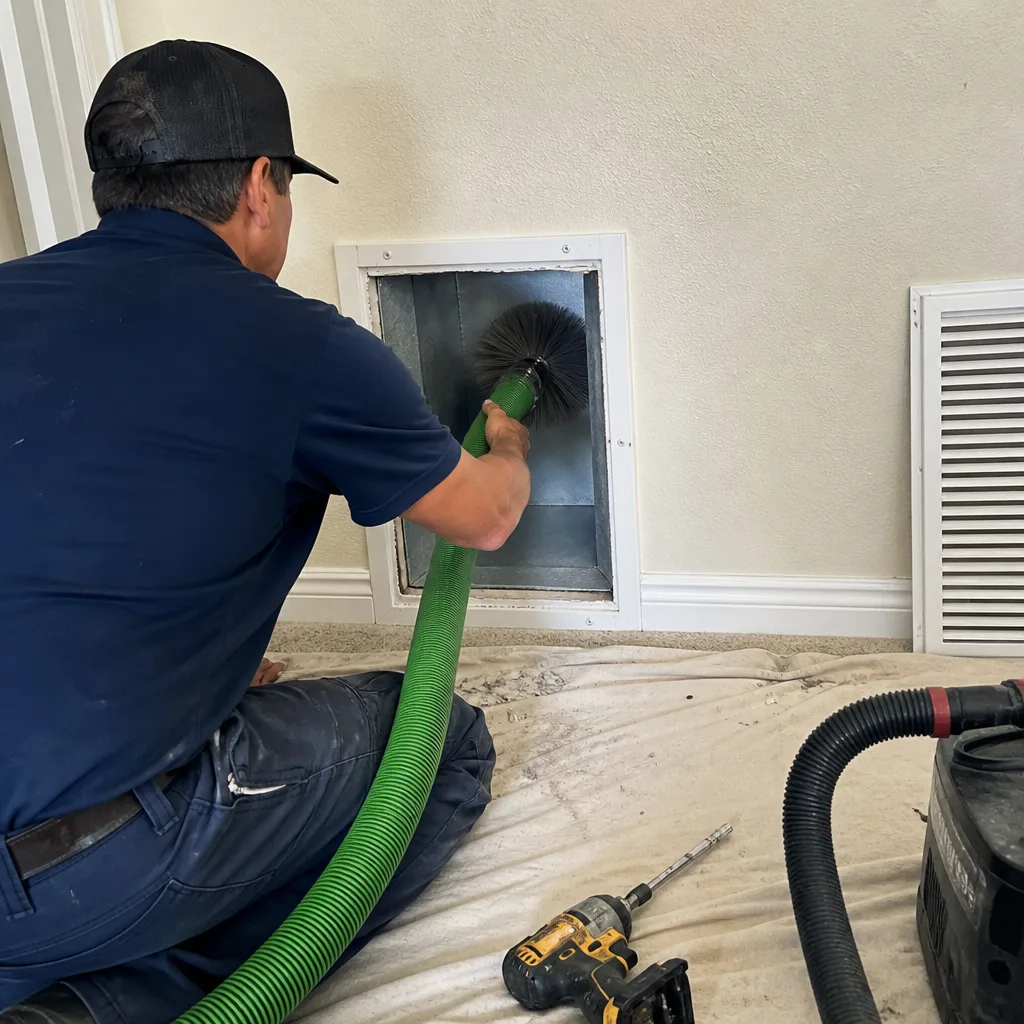
- Flexible duct brush kit (8-12 feet with drill attachment): $35-$75 on Amazon or at Northern Tool. The drill-attached kits will spin a brush head through the first few feet of a straight run.
- Inspection camera / endoscope for phone: $30-$60. This is actually one of the most useful purchases, and it’s reusable for plumbing and crawl-space checks.
- Replacement filter: $15-$25 for a good MERV 8-11 pleated filter.
- Your time: 3-5 hours for a typical 2,000 sq ft Jacksonville single-story home if you’re methodical: remove and clean 12-16 registers, wipe boots, brush the first foot of each run, vacuum the filter housing, clean the return grille.
Total DIY cost: $110-$260 in materials, plus 3-5 hours of labor, and you’ll clean roughly 15-20% of the system’s interior surface area.
What professional air duct cleaning costs in the Jacksonville market
Professional duct cleaning in Jacksonville typically runs $350-$650 for a single-system home under 2,500 sq ft, depending on the number of registers, trunk line configuration, and condition of the system. That’s the whole-system price, not a per-vent add-on. It includes negative-pressure extraction with 4,000+ CFM equipment, rotary brush or air whip agitation through every reachable run, register and grille cleaning, filter housing wiping, and a post-clean inspection with photos. Some Jacksonville companies will price by square footage, some by the number of supply runs, and some by the system. The lower end of that range usually reflects a single return and 10-12 supplies; the higher end reflects a two-story home with 18-20 supplies, two returns, and duct board trunk lines that require gentler handling.
Now the honest comparison. If the job you’re trying to accomplish is “make the visible registers look better,” DIY wins on price, and you should just do that and not hire anyone. If the job is “remove 5 to 15 years of accumulated dust, dander, and renovation debris from the entire duct network,” DIY doesn’t compete on price at all because it doesn’t accomplish the job. You’d be paying $200 for a 15% clean, which breaks down to $13.30 per square foot of surface actually cleaned. The professional job at $500 for a 95% clean breaks down to about 5 cents per square foot. The right comparison isn’t $200 vs $500; it’s $200 for surface dusting versus $500 for the actual job.
We’ll also note what we tell every Jacksonville homeowner who calls asking about cost: get the price in writing before the work starts, and know what that price covers. A legitimate quote specifies the number of supply runs, both returns, the trunk line, and the plenum. If a company quotes you $99 as a teaser and then builds the real invoice per vent once they’re in the door, that’s the specific failure mode this industry is known for, and it’s precisely what a written quote protects you from. We put our price in writing before any work begins, every single time, and the number you approve is the number on the invoice. No per-vent math at the end.
DIY Best Practices That Are Genuinely Worth Your Time
Here’s the part where we defend DIY, because there’s a set of tasks that absolutely belong in the homeowner’s hands and that professionals should not discourage. These are the jobs a Jacksonville homeowner can do well with basic tools, repeat twice a year, and get real air-quality benefit from. They occupy the 15% that we mentioned up top, and they’re worth doing between professional cleanings because they keep the visible surfaces clean and maintain airflow at the registers.
Register and grille cleaning: the twice-a-year baseline
Floor registers in Jacksonville homes collect pet hair, sand, and dust bunnies at a rate that surprises people. A supply register in a home with two dogs and a sandy backyard will build up visible debris in six weeks. The cleaning process is straightforward:
- Remove the register cover with a screwdriver or by lifting it out (most modern registers are friction-fit).
- Take the cover outside or to a utility sink and wash it with warm water and dish soap. A soft brush gets into the louvers.
- While the cover dries, use a vacuum hose with a crevice tool to clean out the register boot (the metal box the register sits in). Reach down 8-12 inches with the hose.
- Wipe the exposed boot surfaces with a damp microfiber cloth. Don’t use anything wetter than damp; you don’t want to introduce moisture into the duct itself.
- Do not spray any cleaning product into the duct. Nothing you spray goes in there unless you’re specifically treating for mold, which is not a DIY task.
- Reinstall the cover, making sure the louvers face the direction you want the air to go (or keep them as they were).
Do this on all registers twice a year. It takes 30-60 minutes for a whole house, and it genuinely improves the visible air quality in the rooms you spend the most time in.
Filter housing wipe-down: the most skipped 5-minute job
Your filter does the actual work of catching airborne particles before they enter the return side of your air handler. But the filter housing itself, the slot where the filter slides in, accumulates a felt-like coating of dust around the edges, and every time you change the filter, a puff of that dust goes downstream. While the filter is out, run a damp cloth around all four edges of the housing and vacuum the floor of the compartment. Do this every filter change, which in Jacksonville with a standard 1-inch filter should be every 30-60 days, or every month during the summer AC peak. Check your filter’s actual condition; many Jacksonville homeowners are surprised to see how fast a filter loads during our long cooling season.
Dryer vent clearing: a legitimate DIY task with one footnote
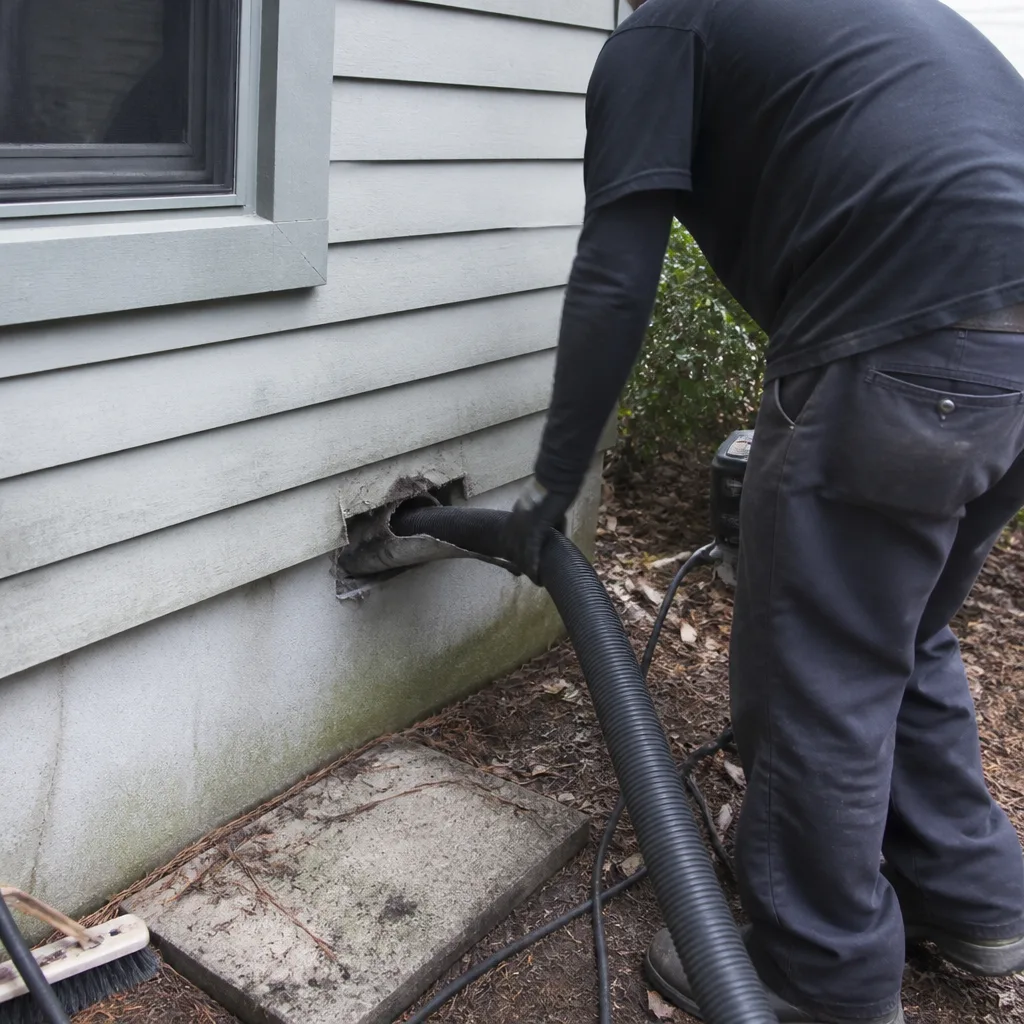
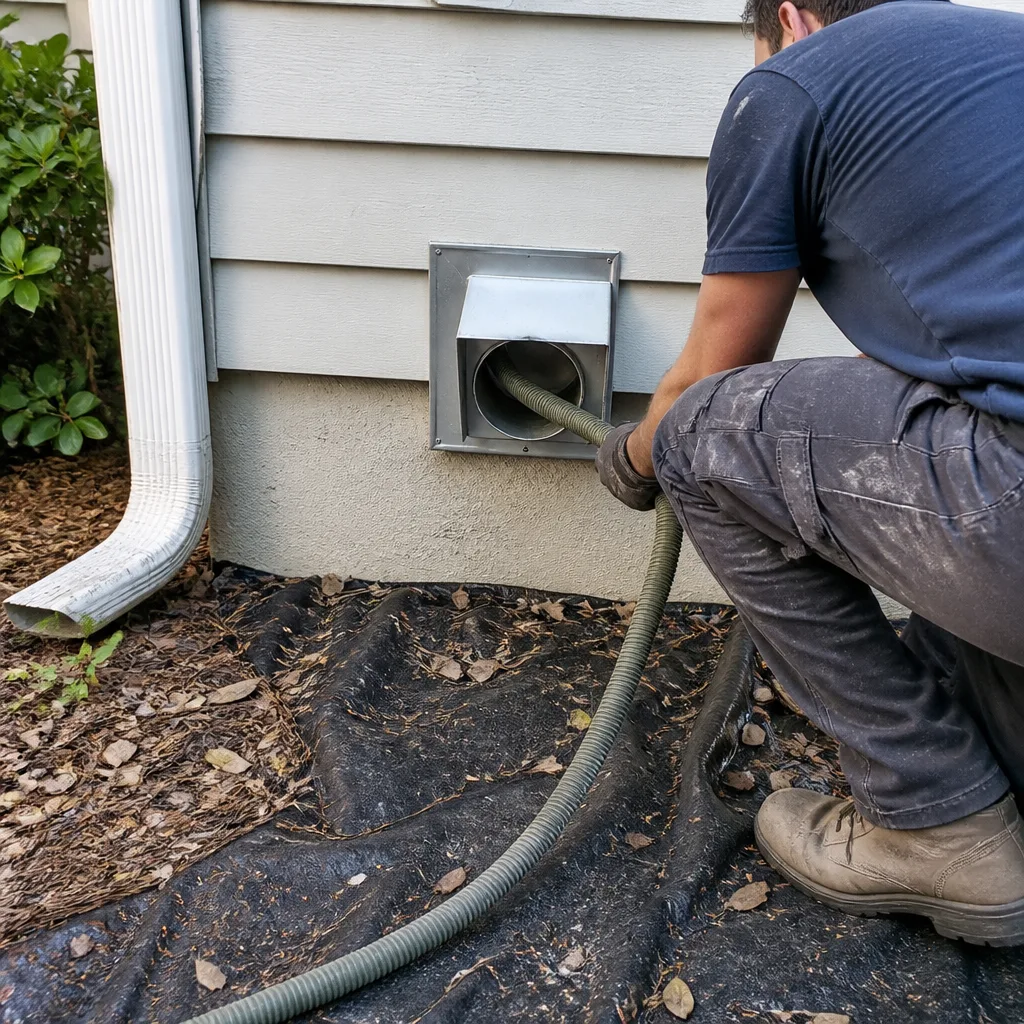
Clearing a dryer vent is genuinely within DIY capability if your vent run is a short, straight, exposed path through an exterior wall (common on Jacksonville single-story homes where the laundry is on an exterior wall). Remove the lint trap, vacuum the trap housing, remove the exterior vent cover, run a dryer vent brush kit through the full length, and confirm airflow at the exterior. The footnote is that a vent that takes a long run through a crawl space or attic, makes turns, or exits through the roof is a different animal. Those need a pro with a rotating brush and often dedicated dryer vent cleaning equipment to clear the lint accumulation without leaving broken sections behind. Lint fires are real, and Jacksonville’s washing machines and dryers run heavy loads year-round. If your dryer takes more than 35-40 minutes to dry a normal load, that’s the signal to address the vent. The same basic rule applies here: short, straight, visible runs are DIY. Long, hidden, convoluted runs are professional territory.
One more specific note for Jacksonville homeowners with the laundry in a garage: the exterior vent hood on a garage-side wall often gets painted over, caulked, or partially blocked by storage. Check yours actually opens and closes freely. Birds and wasps build nests in vent hoods down here, and a blocked hood defeats every other step in the process.
How to Use a DIY Inspection to Prepare for a Professional Cleaning
Here’s a genuinely useful practice that most homeowners never think about: spend 30 minutes inspecting your own system before you make the call, and write down what you find. When a professional arrives, the information you gathered makes the appointment more productive, and it also lets you speak to the technician’s competence by observing how they respond to your observations. A good technician will confirm what you’ve noted and add detail. A bad one will disregard it and immediately start generating invoice line items.
What to photograph before the visit:
- One sample register from each room, with the cover on and off, showing the boot interior as deep as your camera will capture.
- The filter housing with the filter removed, showing the condition of the edges and any dust accumulation on the downstream side.
- The air handler cabinet if you can safely access it, specifically the evaporator coil (the part you can see through the access panel) and the blower wheel.
- The return grille and any visible ductwork in the attic or crawl space, especially if you see staining, sagging, or disconnected sections.
- The dryer vent path if accessible, and the exterior hood.
What to measure and note:
- Number of supply registers and their locations. This is the single most important number for a quote. Count them before you call, because a phone estimate needs this to be accurate.
- Type of return configuration: single central return vs multiple returns. Homes with a single large return in a hallway (common in 1960s-80s Jacksonville) often have heavier duct loading because that one return pulls from the whole house without any bedroom-level returns.
- Whether any ducts are fiberglass duct board. If you can see the trunk line in the attic and it’s rectangular with a foil-facing exterior, that’s duct board. Note it. It changes the cleaning method.
- Any musty odors, especially when the AC first kicks on. That smell that lasts 5-10 seconds at system startup is often humid air passing through loaded ductwork, and it’s a useful diagnostic clue.
- Recent work or water events. Renovation dates, roof repairs, plumbing leaks, or flooding history. If you had a roof replaced in the last two years, the ducts may have picked up debris during the work.
- Occupant health notes. If someone in the house has allergies or a respiratory condition, that’s relevant to cleaning method and post-clean testing.
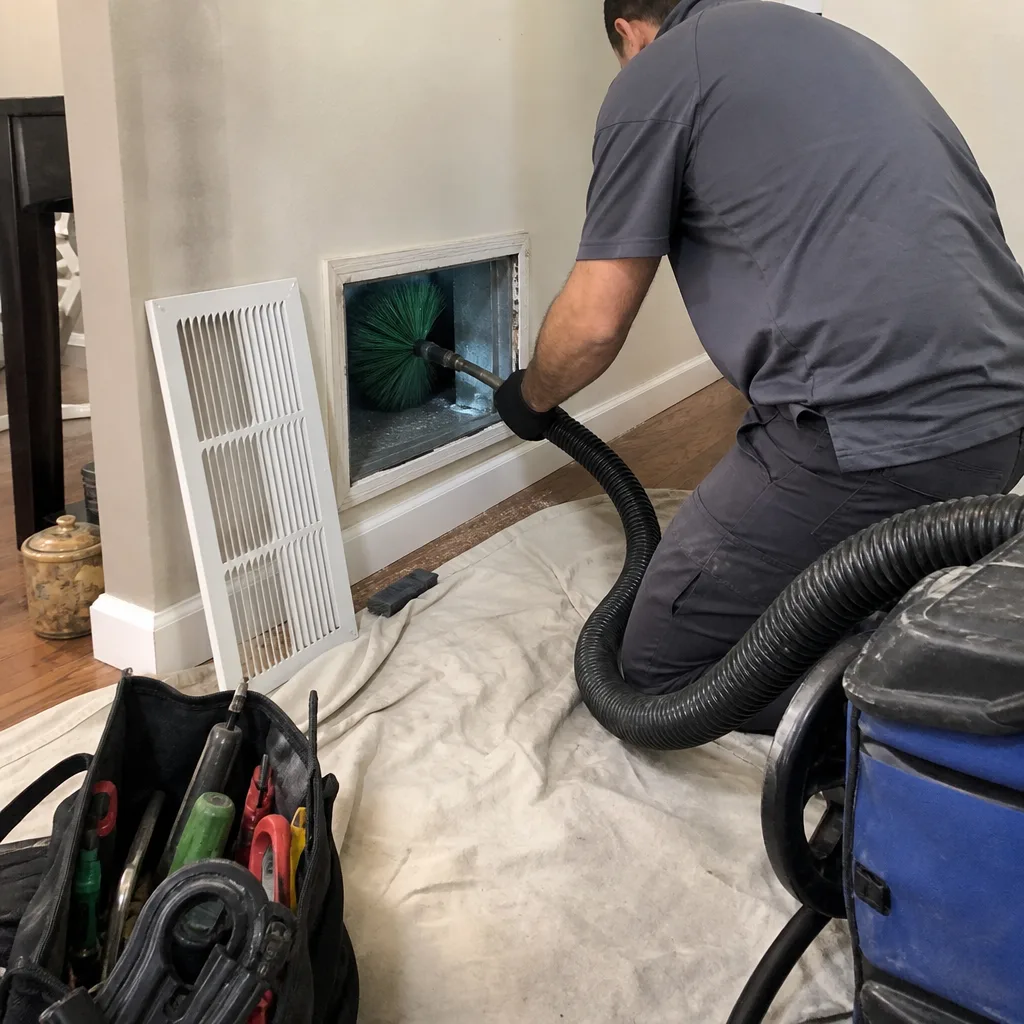
- System isolation and negative pressure setup. The technician cuts an access hole in the trunk line or removes a register to attach a large vacuum hose (usually 8 to 12 inches in diameter). The hose connects to a negative-pressure unit mounted in a truck or portable unit inside the home. The unit pulls 4,000 to 6,000 CFM through the duct system continuously for the duration of the cleaning. This constant suction means that any debris dislodged anywhere in the system is extracted, not just relocated. Equipment commonly used includes truck-mounted units from brands like Rotobrush and Nikro, which are trade-trusted names in the industry.
- Register and grille removal. Every supply register and return grille comes off. Each one is cleaned individually, often outside the home or at a designated cleaning station, then reinstalled after the duct work is complete.
- Mechanical agitation of every reachable run. With negative pressure running, the technician feeds an air-powered rotary brush, whip system, or rotating wire brush down each branch run from both ends where accessible. The brush head breaks loose the caked dust and debris, and the negative pressure carries it immediately out of the system to the collection unit. This is the step that no home tool can replicate, because it requires both the mechanical action and the continuous extraction happening at the same time.
- Trunk line and plenum cleaning. The main supply trunk and return plenum get the same treatment, often with additional agitation equipment for larger-diameter duct. This is where the bulk of the legacy debris sits, and it’s where the bulk of the cleaning time goes.
- Filter housing and air handler interface. The filter slot gets wiped down, the area around the air handler is vacuumed and cleaned, and the technician verifies that the filter fits properly and that the filter rack is sealing. Some companies offer evaporator coil cleaning as an additional service; this is worth asking about in Jacksonville because our high humidity drives coil fouling faster than in drier climates.
- Post-clean verification. A professional company shows you the work: before-and-after photos of the trunk line interior from the access points, a visual walkthrough of the registers, and a full accounting of what was cleaned and what was found. If a company can’t show you the interior of your ducts after the clean, ask why.
- Access hole sealing. Any access holes cut in the ductwork are sealed with proper metal patches and mastic or tape rated for HVAC, not duct tape.
- Confusing visible register dust with system cleanliness. A clean-looking register face tells you nothing about the 15 feet of branch run behind it. In our experience in Jacksonville homes, the trunk line is usually 3 to 5 times dustier than the visible register areas, and the only way to know is to look inside with a camera or have a professional inspection.
- Using a leaf blower in the attic to “blow out” the ducts. This creates positive pressure instead of extraction, pushing dust into the house through the registers. It also dislodges attic insulation piles that then migrate onto the duct surfaces. Never do this.
- Spraying disinfectants or “duct fresheners” into the register openings. These products coat the interior surfaces with chemicals that get re-aerosolized into your living space. If there’s a genuine odor or mold concern, the problem requires source removal or remediation, not fragrance.
- Buying generic 99-cent fiberglass filters and running them for six months. A standard throwaway filter in a Jacksonville home doing heavy AC duty should be changed every 30-45 days. The filter’s job is to protect the equipment and the ducts. An overloaded filter bypasses air around its edges and lets unfiltered air through.
- Doing DIY cleaning on fiberboard duct liner without knowing it. Running a stiff brush over fiberglass duct interior surfaces can tear the liner and release glass fibers into the air stream. If your trunk line is rectangular with foil facing, confirm it’s duct board before you touch anything.
- Assuming a “duct cleaning special” is equivalent to a professional cleaning. Low-ball duct cleaning offers in the Jacksonville market are often loss leaders designed to get a technician in the door for an up-sell. Ask for the written scope of work and the total price before the appointment, and be suspicious of per-vent pricing structures.
- Ignoring the return side entirely. DIY and low-quality professional work both focus on the supply side because the registers are visible. The return side is where your stale air goes, and a loaded return means the air you breathe is passing through years of settlement. A proper cleaning covers both sides.
When you call for a quote, having these specifics at hand turns a vague conversation into a substantive one. You’ll also have immediate leverage if a company’s quote number doesn’t match what you can see with your own eyes. At Linden Air Duct Jacksonville, we encourage this kind of preparation. It makes the job better for everyone, and it’s the same kind of specificity we bring to the work itself: a written price before any work starts, and a tech whose name and photo you’ve received before the visit arrives at the door showing photo ID. The Threshold Standard – every technician background-checked, identity-verified, photo-badged, and introduced to you by name and photo before arrival – is the reason we don’t mind a homeowner who’s done their homework. In fact, that’s the homeowner this is designed for.
How Professional Air Duct Cleaning Actually Works
It helps to know what the professional process looks like, because it explains why the price is what it is and what you’re actually paying for. The equipment used in proper duct cleaning is not a bigger shop vac. It’s a fundamentally different configuration of negative pressure, agitation, and collection.
Here’s the standard protocol for a professional cleaning of a typical Jacksonville single-system home:
The whole process for a typical 2,000 sq ft Jacksonville home takes 3 to 6 hours, depending on the number of runs, the condition of the system, and whether duct board requires the gentler protocol. At the end, you should receive documentation of the work and a written guarantee. Our practice in Jacksonville is to couple every cleaning with a written 365-Day Done Right Promise: if the work isn’t right, we make it right. It’s written on every job, not something you have to negotiate for.
Air quality products from companies like Honeywell, Aprilaire, and Abatement Technologies also enter the conversation at this stage for some homes. A media filter cabinet, a UV treatment system, or a whole-home dehumidifier are not substitutes for cleaning, but they are legitimate additions for Jacksonville homes with persistent humidity issues, allergy-sensitive occupants, or especially dusty environments. We recommend them selectively, not reflexively, and the price for any of it goes in writing before work starts, same as the cleaning itself.
Common Mistakes to Avoid
When to Call a Professional
Call a professional when the problem is structural rather than cosmetic. Specifically: if your Jacksonville home has fiberboard duct liner, if you’ve completed a renovation with drywall or flooring work in the last two years, if there’s been any moisture exposure (roof leak, AC overflow, flood), if anyone in the home has persistent allergy or respiratory symptoms tied to the HVAC, or if the system hasn’t been professionally cleaned in more than five years. Those conditions put the system past anything a homeowner tool kit can address, and the honest decision is to get a full extraction rather than a surface wipe-down. Linden Air Duct Jacksonville offers free estimates in the Jacksonville area – call (904) 329-7854 and we’ll give you a written price before any work begins.
Frequently Asked Questions
Professional air duct cleaning in Jacksonville typically costs between $350 and $650 for a single-system home under 2,500 square feet, depending on the number of registers, the trunk line configuration, and the condition of the system. Always get the full price in writing before work begins, and confirm the quote covers all supply runs, returns, and the main trunk. For guidance on vetting providers, see our How to Hire a Air Duct Cleaning Contractor in Jacksonville: A Step-by-Step Guide. Call (904) 329-7854 for an exact quote on your Jacksonville home – estimates are free.
You can clean the visible register faces, the boots, and the first 10-16 inches of each branch run with a shop vac and a flexible brush attachment, which accounts for roughly 15% of the total duct surface area in a typical Jacksonville home. The remaining 85% – including the full branch runs, trunk line, and return drop – requires negative-pressure extraction equipment that pulls 4,000+ CFM with powered agitation, which no homeowner tool replicates.
Visible dust accumulating on furniture within days of cleaning, musty air at AC startup, a filter that’s heavily loaded within 30 days, unexplained allergy symptoms indoors, or visible dust/debris when you remove a register and look into the boot are all signs the system is due. A professional inspection with a camera can confirm what’s actually in the trunk line and branch runs. Call (904) 329-7854 to schedule a look at your Jacksonville system.
The NADCA standard is every 3 to 5 years under normal conditions, and Jacksonville’s conditions warrant the low end of that range: high humidity causing dust adhesion, 9-10 months of AC runtime, and fine sand tracked indoors from our sandy soil throughout Duval County. For a complete maintenance calendar, see our Seasonal Air Duct Cleaning Care for Jacksonville: Year-Round Homeowner’s Guide. Homes with pets, smokers, or recent renovations may need it more frequently.
A cheap duct cleaning often focuses only on visible register areas, skips the trunk line and returns, and may be priced per vent with additions stacked on after the work starts. A proper cleaning covers every supply run, both returns, the trunk line and plenum, includes powered agitation with negative-pressure extraction, and provides documentation of what was done – all at a price agreed in writing before the work begins.
If your system is more than five years out from its last professional cleaning, yes. The constant humidity, long AC season, and sandy environment mean Jacksonville duct systems carry heavier loads than the national average. The difference in settled dust after a full professional extraction is something you’ll notice within a week. Call (904) 329-7854 for a written quote.
Ask for before-and-after photos of the trunk line and branch run interiors from the access points. A professional company documents the clean. At Linden Air Duct Jacksonville, you receive visual verification of the work, and every job carries our written 365-Day Done Right Promise: if the work isn’t right, we make it right, in writing, on every job.
The Bottom Line
The DIY versus professional decision for air duct cleaning in Jacksonville comes down to a structural fact, not a preference: homeowner tools can clean the 15% of the system you can see and reach, and professional negative-pressure extraction cleans the other 85%. The right answer isn’t the same for every house. A clean 2-year-old system with metal ductwork benefits from regular DIY register and filter maintenance. A 20-year-old Jacksonville duct board system with renovation debris and allergy-sensitive occupants needs the real job. Know what you can see, inspect what you can’t, get a written price either way, and check our more guides & resources for additional homeowner guidance, or if you want a free honest assessment, call (904) 329-7854 – a live person answers, 24/7, and the price is in writing before any work starts.
Written by Marcus Veale, Owner at Linden Air Duct Jacksonville, serving Jacksonville since 2004.
See the difference
 Before
 After
After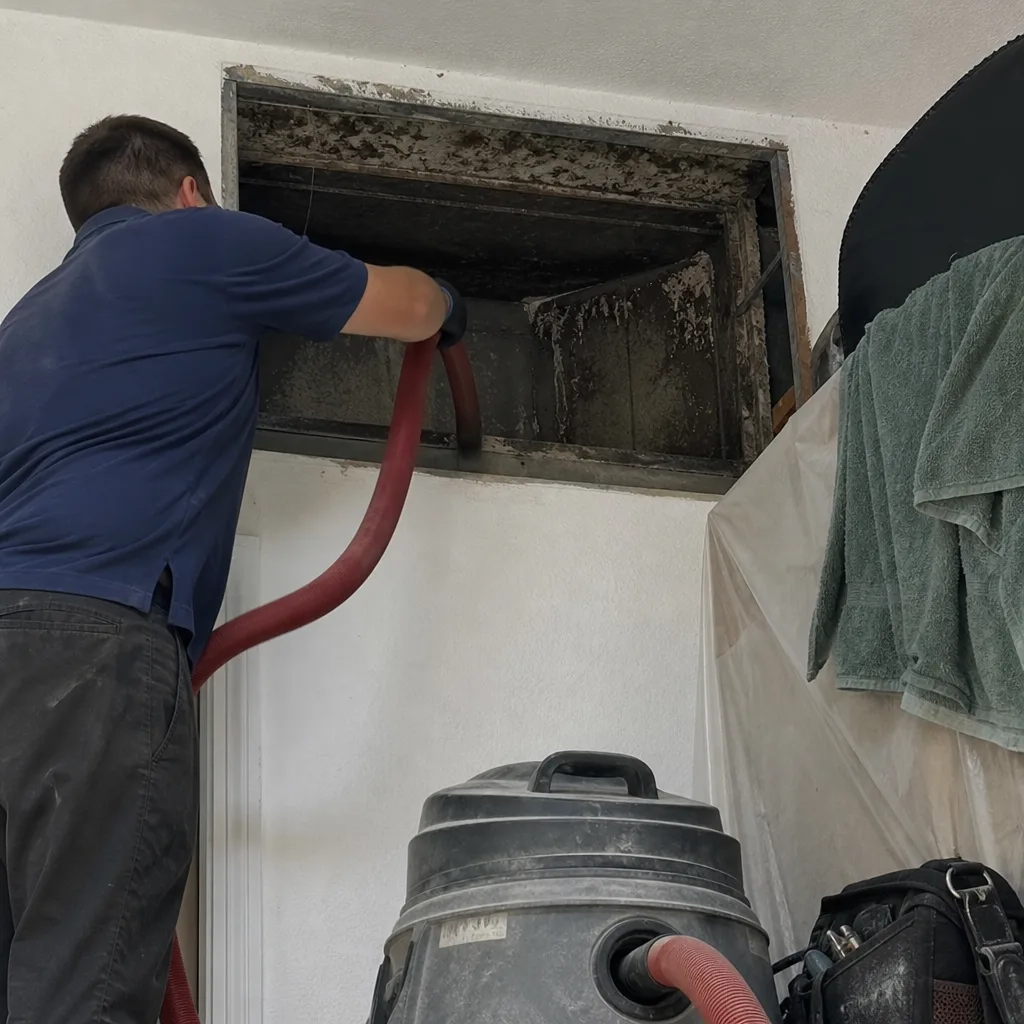 Before
 After
After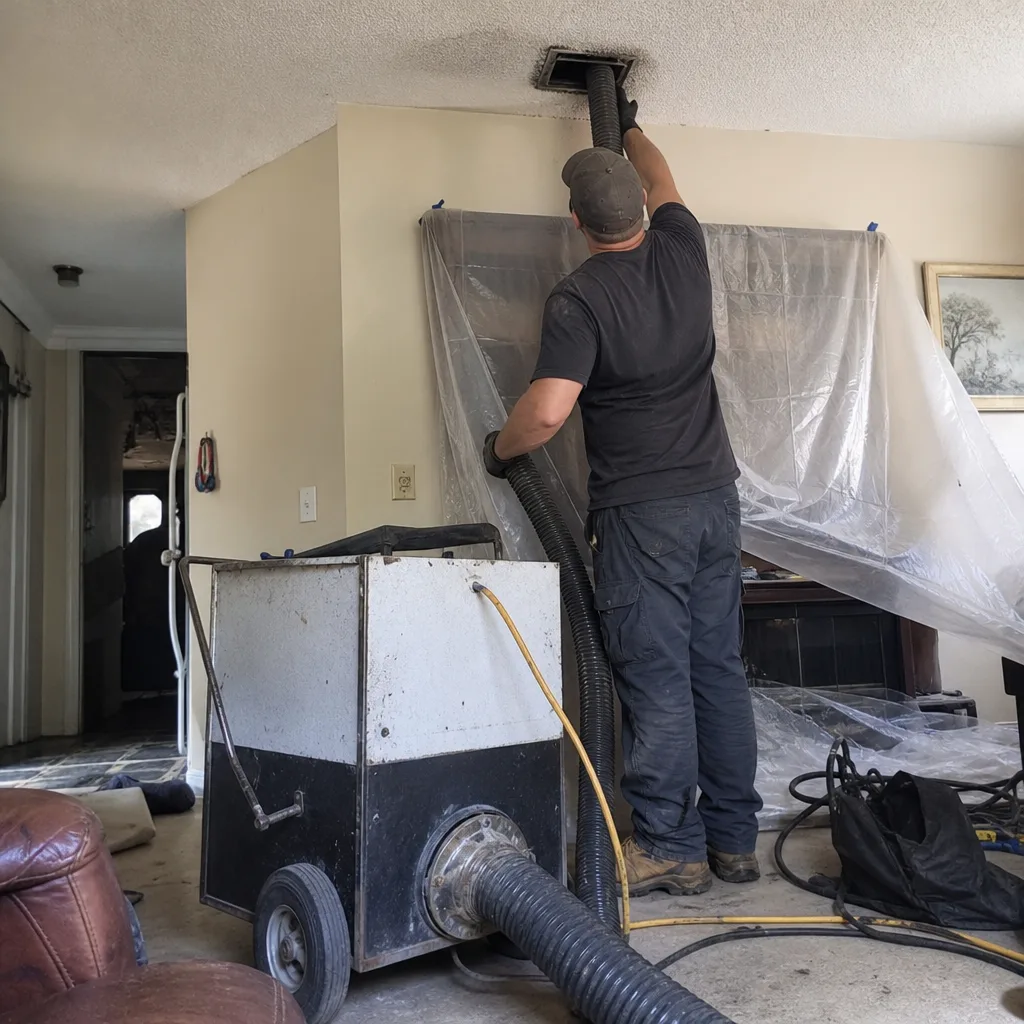 Before
 After
After